Cars use a traffic-light system: red = stop as soon as safe, amber = get it checked soon, green/blue = a feature is active. The most critical red lights are oil pressure, coolant temperature, brake system and battery/charging — any of these means pull over and stop. The engine management light is amber and usually lets you drive to a garage, unless it's flashing (which means stop now). For the NCT specifically: an illuminated airbag or ABS light is an immediate fail, the engine management light isn't technically a fail but prevents the diesel smoke test being carried out, and a broken main-beam indicator fails the headlamp check.
The traffic-light colour system
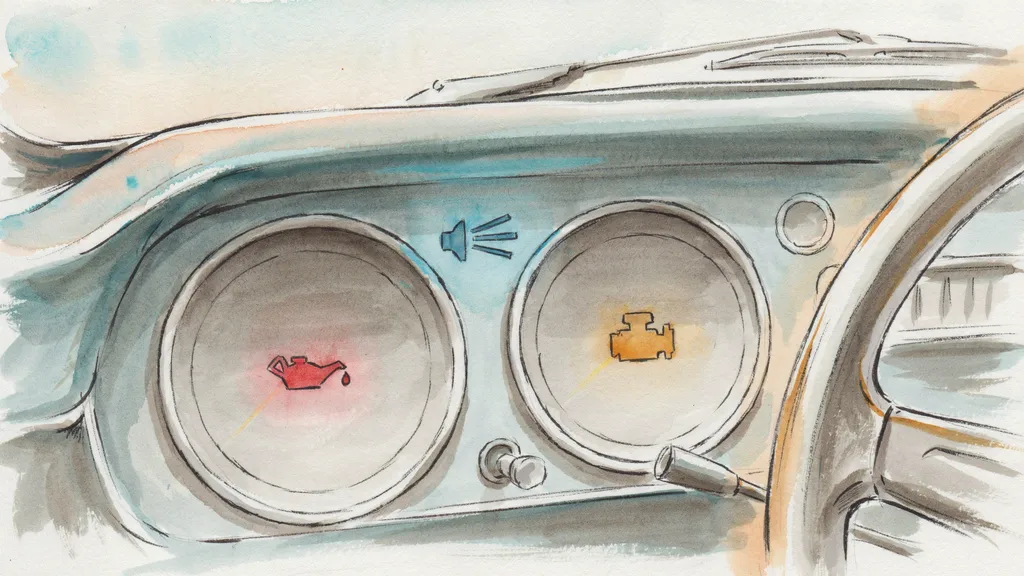
Every modern car follows a universal colour code for dashboard symbols. Once you internalise it, you can triage any unknown icon in a second:
| Colour | Meaning | Action |
|---|---|---|
| Red | Serious fault — driving risks damage or safety | Pull over safely and stop. Diagnose before driving again. |
| Amber / Yellow | Attention required — a system needs servicing or has a fault | Drive carefully to a garage soon. Don't ignore for weeks. |
| Green | A feature is active and working correctly | No action — just confirmation (main beam, cruise control, indicator). |
| Blue | Specifically: main beam is on | Switch to dipped beam when meeting other traffic. |
| White / Grey | Less standardised — usually informational | Check handbook if unfamiliar. |
Flashing lights of any colour are always more urgent than steady ones. A steady amber engine light usually lets you drive on carefully; a flashing amber engine light means stop now before you wreck the catalytic converter.
What to do when a light comes on — the 30-second checklist
- Don't panic. Most warning lights give you at least a few minutes to get somewhere safe.
- Identify the colour. Red = stop soon. Amber = keep driving carefully. Green/blue = no action.
- Note whether it's solid or flashing. Flashing is always more urgent.
- Check the other gauges. Any temperature warning? Any unusual noise, smell or handling? That sharpens the diagnosis.
- Find somewhere safe to stop — petrol station, lay-by, car park. Don't slam to a halt on a motorway for a non-critical light.
- Check the handbook — both the physical book in the glovebox and the in-car manual (most cars display explanations via the infotainment screen).
- Decide: drive on, wait for temperature, or call recovery. Err on the side of caution with any red light.
Red warning lights — stop as soon as safe
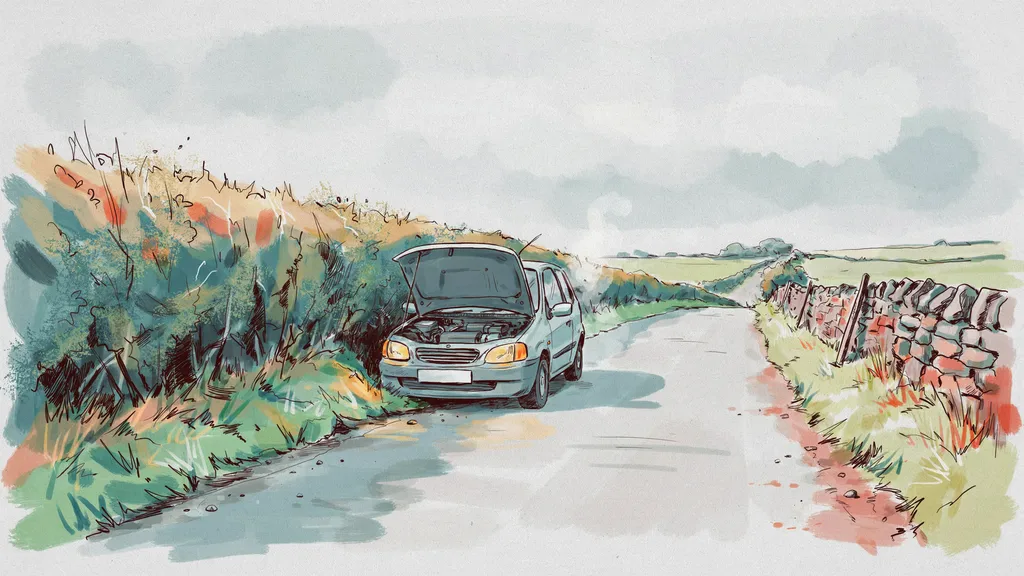
These are the ones that can cost you an engine, a catalytic converter or your life if ignored. When any of these illuminate, pull over safely as soon as possible.
| Light | What it means | What to do |
|---|---|---|
| Oil pressure (oil can + drop) | Insufficient oil pressure — oil too low or pump failure | Stop now. Engine damage is minutes away. Top up oil if low; otherwise call recovery. |
| Coolant / engine temperature (thermometer in water) | Engine overheating — coolant low, head gasket, thermostat failure, or pump | Pull over. Don't open the hot cap. Let it cool for 20 minutes. Top up coolant or call recovery. |
| Brake system (exclamation in circle, or 'BRAKE') | Brake fluid low, handbrake still on, or a brake-pad wear sensor triggered | Release handbrake first. Check brake feel. If spongy or poor, stop and call recovery. |
| Battery / charging (battery outline) | Alternator not charging — the car is running on battery alone | Turn off non-essential electrics. Head straight to a garage. Don't turn engine off unless stationary at destination. |
| Airbag / SRS | Airbag system fault — airbags may not deploy in a crash | Safe to drive mechanically, but an immediate NCT fail. Get diagnostic. |
| Power steering failure (steering wheel + !) | Loss of assistance — steering becomes very heavy | If already moving, drive slowly to safety. Avoid fast lane changes. Garage immediately. |
| Seatbelt | A seatbelt isn't fastened | Buckle up — also a major NCT fail if the warning system is disconnected. |
| Door / bonnet / boot ajar | Self-explanatory | Stop and close properly — an open bonnet at motorway speed is catastrophic. |
Two warning lights where continuing to drive turns a €100 fix into a €4,000+ engine rebuild in minutes: the red oil pressure light and the red coolant temperaturelight. If either one comes on, the cheap and correct answer is always to pull over, turn off the engine, and investigate. Never "limp home" with either.
Amber warning lights — get it checked soon
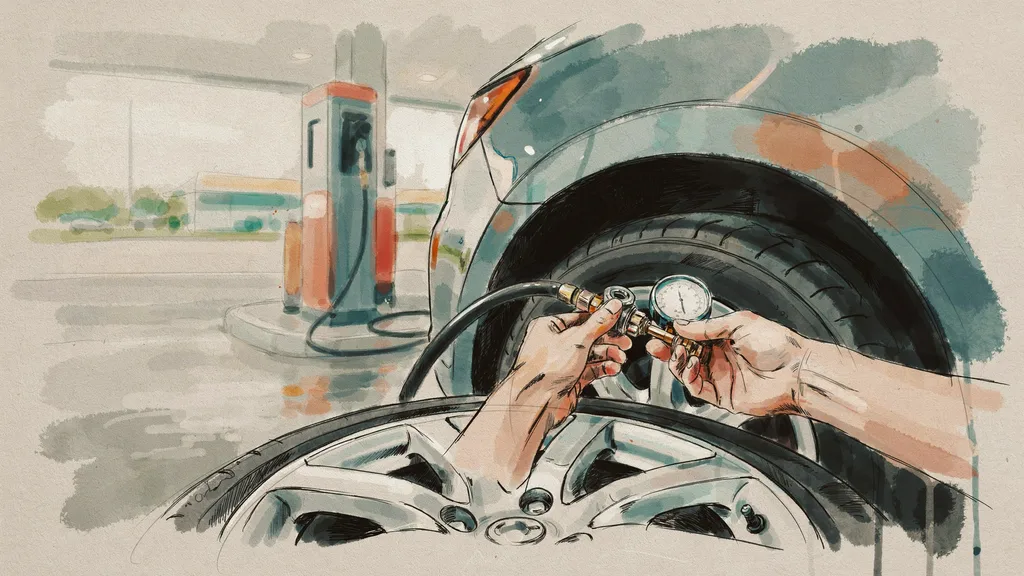
Amber means a fault or wear state that needs attention, but you have time to get to a garage rather than calling recovery from the roadside.
| Light | What it means | What to do |
|---|---|---|
| Engine management (MIL) — yellow engine outline | Emissions or engine-control fault detected by the OBD system | Solid: drive carefully to garage soon. Flashing: stop now — serious misfire that can wreck the catalyst. |
| ABS | Anti-lock braking system offline — normal brakes still work but wheels can lock under hard braking | Drive gently, avoid emergency braking. Book diagnostic. Immediate NCT fail. |
| Traction control / ESP / ESC | Stability control has a fault or is temporarily disabled | Drive carefully, especially in rain. Check handbook — button may have been pressed accidentally. |
| Tyre pressure (TPMS) — flat tyre + ! | One or more tyres below target pressure (typically 20–25% low) | Inflate at next petrol station. Visually check for damage. If light returns quickly, get inspected. |
| Glow plug (coil icon, diesel) | When starting: diesel warming up. Stays on after start: glow plug fault. | Pre-start: wait for it to extinguish, then start. Post-start: book diagnostic. |
| DPF — Diesel Particulate Filter | Soot buildup — filter needs to regenerate | Take car for a 20–30 min motorway drive at 2,000+ rpm. If light stays after, garage. |
| AdBlue low | Diesel exhaust-treatment fluid running low | Top up (€10–€20 at filling stations). Ignoring leads to no-start lockout at 0 km range. |
| Fuel low — pump icon | Usually ~50–80 km range remaining | Fill up at next opportunity. |
| Service reminder / oil change — spanner icon or "SERVICE" | Scheduled service interval reached | Book service. Not an emergency. |
| Washer fluid low | Windscreen washer reservoir nearly empty | Top up — a 5L bottle of screenwash is €6–€10 at any filling station. |
Green and blue lights — just information
These aren't warnings at all — they simply confirm that a feature is working:
- Green indicator arrow — turn signal is on
- Green sidelight / headlight — side lights or dipped beam active
- Blue main beam — high beam is on (remember to dip for oncoming traffic — a broken main beam indicator is an NCT fail)
- Green cruise control — cruise system active and at set speed
- Green eco — fuel-efficient driving mode engaged
- Green front fog light / yellow rear fog light — fog lights on; switch off when visibility improves (rear fogs dazzle following traffic)
EV-specific warnings
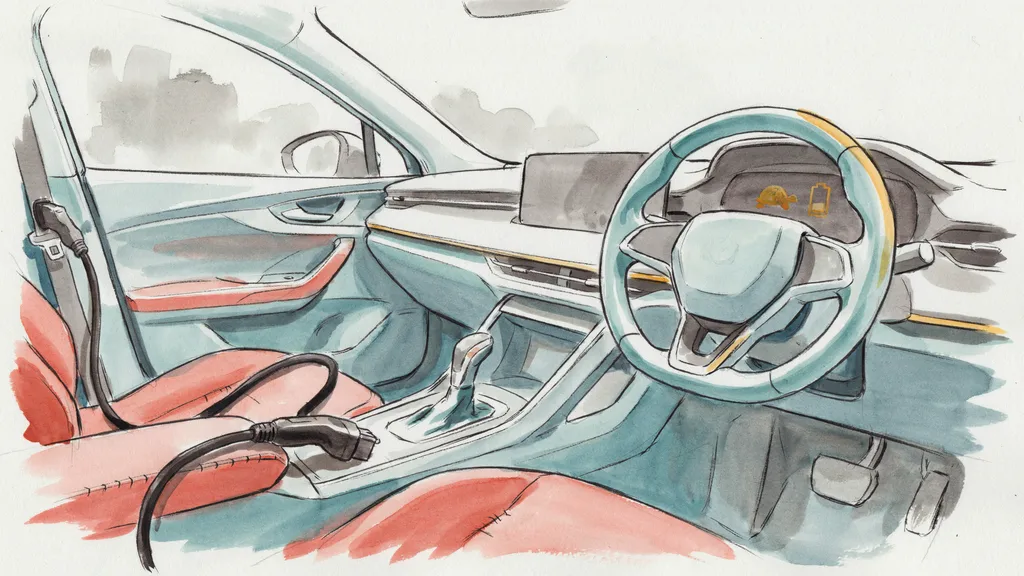
Electric cars add their own symbols on top of the traditional dashboard set. The most important:
| Light | Meaning | What to do |
|---|---|---|
| Turtle / reduced power | Limp-home mode — traction battery very low, or battery/motor overheating | Reduce speed, turn off climate, head to nearest charger. If persistent, main-dealer diagnostic. |
| Battery state of charge (red) | Traction battery critically low | Head to nearest charger immediately — see our EV public charging guide. |
| Battery temperature (amber/red) | Traction battery too hot or too cold | Avoid DC fast charging until battery cools or warms. Park out of direct sun in hot weather. In cold weather, let the car warm the battery before fast charging. |
| Charging fault | Connection or power-delivery fault during charge | Unplug, check connector and cable. Try a different charger. If persistent, dealer. |
| Ready to drive (green "READY" or similar) | Car is powered on and ready — equivalent of an ICE car's engine running | No action — just confirming. |
| Regen braking / one-pedal mode | Strong regenerative braking is active | No action — just a driving-mode indicator. |
| Pedestrian warning sound | External low-speed sound generator is active (mandatory on EVs under AVAS regulation) | No action — informational. |
Warning lights and the NCT — what actually fails the test
There's a widespread myth that any illuminated dashboard warning light is an automatic NCT fail. That's not accurate — the reality is more specific. Here's exactly what NCT testers check:
| Light | NCT verdict |
|---|---|
| Airbag / SRS illuminated | Immediate FAIL |
| ABS illuminated | Immediate FAIL |
| Main beam indicator not working | FAIL of the headlamp-condition check |
| Engine management light (MIL) illuminated | Not a fail in itself. But: on diesel cars, the smoke test cannot be carried out while the MIL is on — the underlying fault usually has to be fixed first. |
| Oil pressure light illuminated | Not a direct fail, but the emissions (CO/HC/Lambda) test can't be carried out while the oil light is on — effectively blocks the test. |
| Most other warning lights | Not part of the NCT inspection (TPMS, DPF, service reminders, AdBlue, fuel low, etc.). |
Practical takeaway: before booking an NCT, do the 30-second dashboard walkaround — turn on the ignition, watch all lights illuminate during self-test, then start the engine and check which lights extinguish. Any light that stays on post-start is a candidate for pre-NCT attention. Our NCT first-time pass checklist covers the other typical fail items.
Before heading to the garage — what to note down
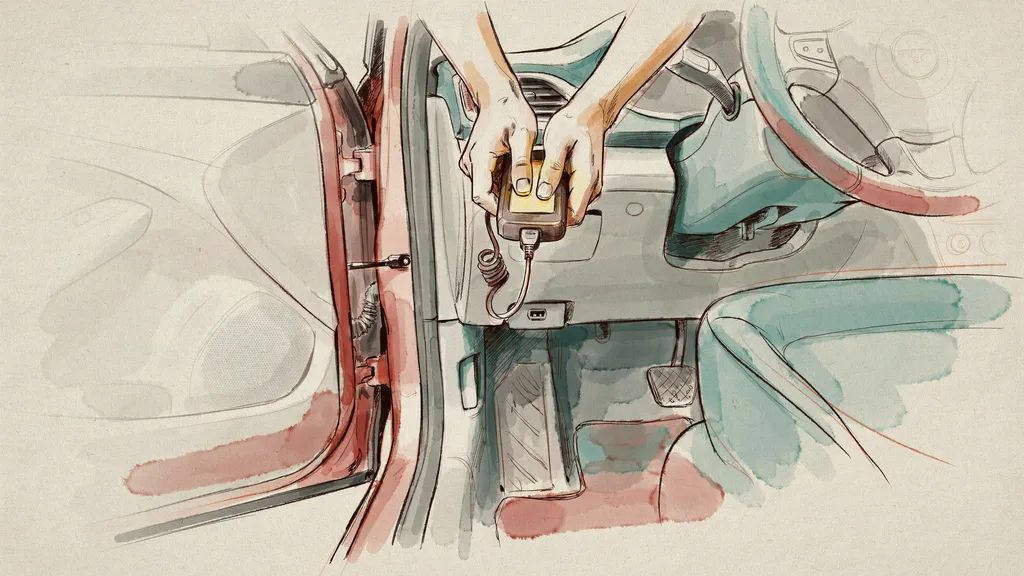
Garages charge for diagnostic time. You can shorten that (and reduce the bill) by capturing exactly what the car did. Make a note of:
- Which light came on — take a photo of the dash if you're not sure what it's called.
- Steady or flashing, and how long it stayed on.
- Any accompanying symptoms — unusual noise, smell, loss of power, rough idle, smoke from exhaust, steering pulling.
- Conditions when it happened — cold start? After hard driving? During rain? On a hill?
- Last service date and mileage — if you track this in odo.ie it's one tap to check.
- Recent work done — sometimes a warning light follows a recent service or tyre change (e.g. TPMS after rotation) and the fix is a simple reset.
If it's a red light and you're on a motorway, in bad weather, or carrying passengers, don't hero-drive. The AA Ireland, AXA Assist and most insurance policies include roadside recovery. A €40 callout saves a €4,000 engine rebuild.
When a warning light sends you to the garage, log the repair in odo.ie
Every repair, diagnostic scan and fault code you log in odo.ie becomes part of your permanent digital service history. Six months later when the same light reappears, you can check in seconds what the last garage diagnosed — and whether the current issue is a recurrence or something new. At resale time, a complete service log with repair documentation adds €1,000–€2,000 to trade-in value.