
Four possible overall results: Pass / Pass Advisory (still passes, address advisories soon) / Fail / Fail Advisory. Three fail tiers: Minor (X1) — small defect, re-test required; Major (X2) — significant defect, most common; Dangerous (X3) — do NOT drive, recovery to garage. 30 days to re-test; over 30 days = full new NCT. Re-test fees: €40 with equipment, FREE for visual-only. OBD Phase 2 (since May 2023): engine-management codes fail outright; engine warning light on = fail. Headlight aim (Item 7.1.1) is the single most common non-visual fail. 90-day pre-test window: test 60–90 days early so you can fix and re-test without driving on expired cover. Driving on expired NCT: 3 points + €60 FCN, insurance may be voided. Most repairs €20–€500; catalytic converters and corrosion repairs much more. Always log the result in odo.ie so the next buyer (and the next-you) sees the full history.
What you receive

After every NCT (pass or fail) you get a Vehicle Inspection Report (VIR). It can be sent electronically by email (preferred — keep a digital copy) and is printed at the centre if you fail. The VIR lists every item tested, the result for each, any defects found, and the overall outcome. It's a useful document — at resale, a buyer who sees a clean run of NCT VIRs has far more confidence in the car than one without.
The format is standardised by the Road Safety Authority and operated by Applus (the NCTS contractor), and aligns with EU Directive 2014/45 categories.
The 4 possible overall results
| Result | What it means | Re-test? |
|---|---|---|
| 1. PASS | All items tested passed | No — certificate issued, valid 1 or 2 years depending on car age |
| 2. PASS ADVISORY | Items passed, but one or more flagged as “Pass Advisory” — fix soon (e.g. tyre tread under 3 mm, tyre over 6 years) | No — certificate issued; address advisories before next test |
| 3. FAIL | One or more items failed (Minor / Major / Dangerous) | Yes — within 30 days |
| 4. FAIL ADVISORY | One specific item is “Fail Advisory” (e.g. registration-plate-lamp Item 61) — currently doesn't fail outright but is flagged | If no other items failed, no re-test required for the advisory item alone |
When you log your result in odo.ie, the new NCT due date auto-rolls — you don't have to remember to calculate it.
The three fail tiers — Minor / Major / Dangerous
Under EU Directive 2014/45, every failed item is rated by severity:
| Tier | Code | Meaning | Action |
|---|---|---|---|
| Minor | X1 | Small defect, no impact on safety / environment | Re-test required, certificate not issued until fixed |
| Major | X2 | Significant defect compromising safety / environment | Most common type of fail; book garage promptly |
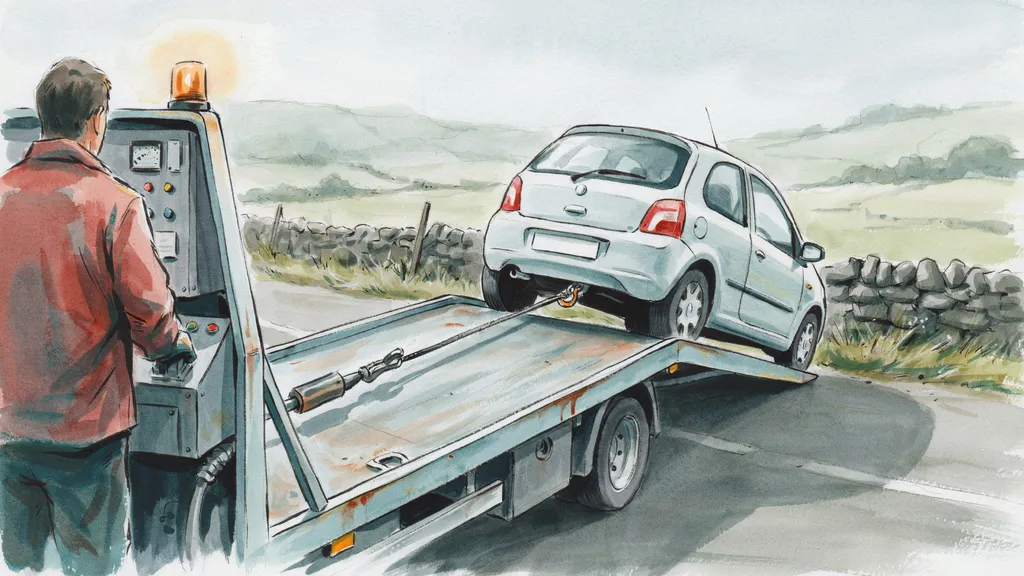
| Dangerous | X3 | Direct, immediate safety risk | DO NOT DRIVE; arrange recovery to garage |
A Dangerous (X3) fail means the NCTS centre judges the vehicle unfit for road use. A “Failed Dangerous” sticker is placed on the car. Driving from the centre exposes you to criminal liability, voided insurance, and civil liability for any incident. Arrange recovery — AA / RAC / IRR / local breakdown specialist, typically €80–€200.
The re-test process
- 30 days to get re-tested after a fail
- If re-test happens within 30 days: only the failed items are re-tested
- Exceeding 30 days: full new NCT required (full €60 fee)
- Re-test fee with equipment (gas test, headlight beam-setter, brake performance, suspension tester): €40
- Re-test visual-only (visible defects, light bulbs, wiper blades, plates etc.): FREE
- Bring the original VIR — tells the inspector exactly what to verify
- Visual-only re-tests don't need a new appointment — visit during open hours
Fees (August 2026)
| Item | Cost |
|---|---|
| Full NCT | €60 |
| Re-test (with equipment) | €40 |
| Re-test (visual only) | Free |
| No-show / late cancellation surcharge | €24 (or €16 for re-test) |
Always confirm current fees at ncts.ie before booking — fees occasionally change with annual reviews.
The OBD test
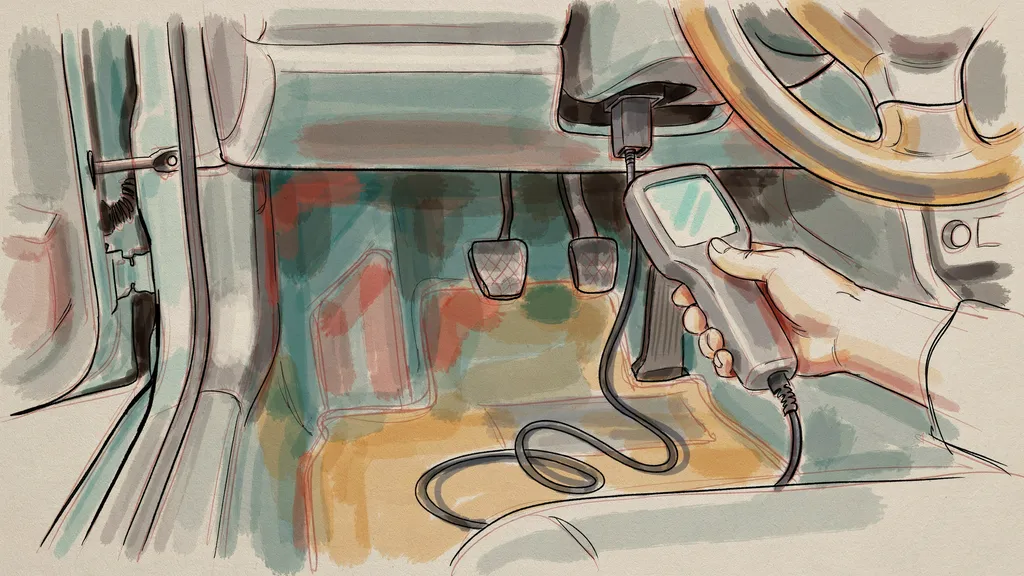
OBD = On-Board Diagnostics. Plugged into the OBD port (under the steering wheel or in the glovebox), the tester reads error codes from your car's computer.
- Phase 1 (June 2021): OBD errors gave Pass Advisory only — no failure
- Phase 2 (since May 2023): certain OBD errors are now FAILS — engine and emissions related are the main targets
Common OBD fail codes
- P0420 — Catalytic converter efficiency below threshold
- P0130-series — Oxygen / lambda sensor malfunction
- P0300-series — Misfire detection
- P0400-series — EGR system fault
- MIL on — Engine check light illuminated indicates an active fault
If your engine warning light (MIL) is on, it's an automatic fail under Phase 2 OBD testing. Get diagnosed and fixed BEFORE the NCT. Cost: €50–€500+ depending on the cause. Any independent garage with an OBD scanner can read codes for €0–€20 — do this before the test rather than discovering the fail at the centre. See our Dashboard Warning Lights guide for what each light means.
The 62 testable items (categorised)
The NCT examines roughly 62 distinct items across multiple systems. Your VIR shows the result for each. Categories:
| Category | Item range | What's tested |
|---|---|---|
| Identification & Documentation | 1–4 | VIN, number plates legible / correct format, plate lamps |
| Brakes | 5–14 | Brake performance (rolling road), fluid level, disc condition, handbrake, ABS warning lights |
| Steering | 15–22 | Wheel condition / play, power steering, track-rod ends, suspension joints, linkage corrosion |
| Visibility | 23–28 | Windscreen damage, wipers, mirrors, window function, sun visor |
| Lighting | 29–40 | Headlight aim (#1 non-visual fail), headlight condition, indicators, brake lights, sidelights, fog, reverse, hazards |
| Axles, Wheels, Tyres | 41–48 | Tread depth (1.6 mm minimum), tyre condition (sidewalls, age), wheel condition, bearings, suspension components |
| Body & Chassis | 49–55 | Bodywork corrosion (sills, mounting points), doors, latches, seat condition, seatbelt function |
| Safety Equipment | 56–58 | Horn, anti-tampering devices, SRS / airbag warning lights |
| Engine & Environment | 59–62 | Exhaust integrity, emissions (gas test), OBD test, noise level |
The most common NCT failures (Applus data)
Visual defects
- Tyres — uneven wear, cracks, low tread, age 6+ years
- Front suspension — worn shocks, leaking dampers, bushings
- Brakes — worn pads, leaking lines, corroded components
- Steering components — worn track rods, ball joints
- Bodywork corrosion — especially in structural areas (sills, mounting points)
Non-visual / equipment-detected
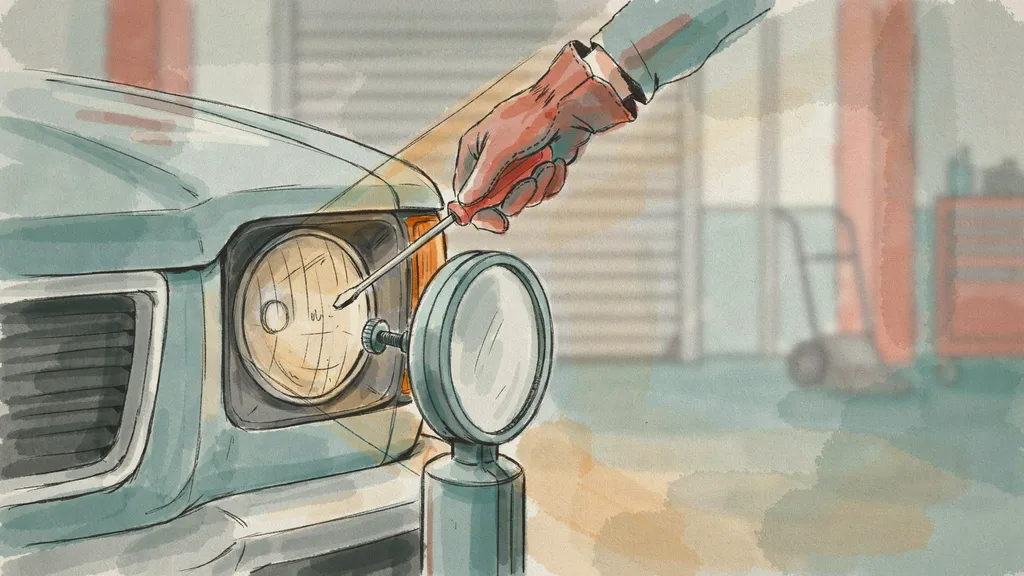
- Headlight aim — beam direction off (the #1 non-visual fail)
- Brake performance — uneven braking, weak handbrake
- Emissions — too high CO / HC for the fuel type
- Suspension efficiency — worn shocks identified by suspension tester
- OBD codes — engine-management faults (Phase 2)
For pre-test preparation see our Pass the NCT First Time guide.
Reading specific report codes — examples
| Report code | Meaning | Action |
|---|---|---|
| 7.1.1 — Headlamp aim — Major (X2) | Headlight beam too high or too low | Beam adjustment €20–€80; re-test required |
| 5.2.2 — Front shock absorber — Pass Advisory | Minor wear, still functional | No re-test; fix at next service |
| 3.2.1 — Front tyre tread depth — Minor (X1) | Below 1.6 mm legal minimum | Replace tyre; re-test required |
| 6.2.1 — Brake performance — Dangerous (X3) | Brakes failed performance test severely | DO NOT DRIVE; recovery to garage |
| OBD code P0420 — Major | Catalytic converter efficiency below threshold | Diagnose and repair; re-test after |
| 9.1.1 — Seatbelt anchorage corrosion — Major | Structural rust around belt mount | Welding repair required; re-test |
Each defect on your VIR includes the item number, the short description, and the fail tier (X1 / X2 / X3) or advisory note. Match the item number against your VIR and ask any garage what the specific repair will be.
What to do with the report — step by step
Step 1 — Don't panic
- About 50% of cars fail the NCT first time — you're not unusual
- Re-test pass rate is over 90%
- Most failures are fixable in days, not weeks
Step 2 — Read carefully
- Note every Major or Dangerous item
- Note Pass Advisory items — fix when convenient (not for the re-test, but for next year)
- Identify which items need test equipment to re-verify (gas test, headlight aim, brake performance, suspension)
Step 3 — Plan repairs
- For Dangerous items: arrange recovery to garage (don't drive)
- For Major items: book garage promptly to stay inside the 30-day window
- For Minor items: still need fixing for the re-test
- Get an itemised written quote before authorising work
Step 4 — Choose a garage
- SIMI-member garages preferred — see our Find a Good Garage in Ireland guide
- Get an itemised written quote
- Ask whether they can also adjust headlight aim (most have the equipment)
- Some will offer a post-repair pre-NCT check to confirm the fix
Step 5 — Book the re-test
- Within 30 days of the original test
- If repair will take longer, plan for a full new NCT
- Bring the original VIR to the re-test
- Visual-only re-tests don't need a new appointment — drive in during open hours
Step 6 — After passing the re-test
- Receive new NCT certificate (paper); display on windscreen
- Log in odo.ie — auto-rolls next due date
- Keep VIR records for resale and for buyer reference
Common fail items + approximate repair costs
| Item | Typical cost |
|---|---|
| Headlight aim adjustment | €20–€80 |
| Tyre replacement (one) | €60–€250 |
| Brake pads (front pair) | €100–€250 |
| Brake disc replacement | €200–€450 |
| Wiper blades | €15–€40 each |
| Bulb replacement | €10–€40 each |
| Suspension shock absorber (one) | €150–€400 |
| Track rod end | €80–€200 |
| Number plate (replacement) | €40 |
| Catalytic converter | €300–€1,500+ |
| Lambda sensor | €100–€350 |
| Bodywork corrosion repair | €200–€2,000+ |
See our Car Tyres in Ireland guide for tyre-specific pricing context (legal limits, age guidance, 2026 prices).
The 90-day window — strategic tip
- You can take your NCT up to 90 days BEFORE the due date without affecting expiry
- Why this matters: gives you a buffer if you fail and need to fix
- Strategy: book NCT 60–90 days before expiry — pass = no impact on existing certificate; fail = time to repair without ever driving on expired NCT
- Booking last-minute is the single most common reason drivers end up driving on lapsed cover after a fail
Driving on expired NCT — penalties
- 3 penalty points + €60 FCN if paid within 28 days
- €90 if paid 28–56 days
- Court appearance if not paid: 5 penalty points + court-ordered fine + theoretically up to 3 months prison
- Insurance: technically, driving on expired NCT may invalidate cover. Insurance Ireland has indicated members will be “pragmatic” given booking delays in recent years, but this is not a guarantee — never rely on it
- Set up odo.ie reminders (30 / 14 / 7 / 1 day) so you never miss the due date
What's coming
- More OBD-based testing as cars become more complex
- EV-specific testing as the fleet electrifies (high-voltage isolation, battery-management warnings)
- Continued focus on emissions (DPF, urea systems on diesels)
- Stricter brake-performance standards under updated EU directives
- More automated reporting / electronic VIR delivery
Log every NCT in odo.ie — pass, advisory, or fail. The complete history helps your future buyer (and your future self) understand exactly what's been maintained.
odo.ie auto-rolls the NCT due date on every pass and sends 30 / 14 / 7 / 1-day reminders so you book in the 90-day pre-test window. Attach the VIR PDF to each NCT entry; log advisory items as service-list follow-ups so they don't fall off the radar. Solo free for 1 vehicle; Family €4/month for 3; Pro €8/month for 10. 77+ Irish guides, no ads, EU data residency.