E-scooters legal in Ireland since 20 May 2024under the Road Traffic and Roads Act 2023. Compliant "Powered Personal Transporter" (PPT) specs: max 400W continuous power, 20 km/h, 25kg, 200mm wheels, CE marking, lights, two brakes, bell. No licence, no insurance, no tax, no registration — but rider must be 16+. Ride on roads / cycle lanes / bus lanes; not on footpaths or motorways. Banned from all NTA public transport since October 2024 (Li-ion fire risk). Over-spec e-scooters (common AliExpress / Amazon imports) fall under e-moped L1e-B — need registration, tax, AM licence, insurance, helmet. Fines start at €60 FCN; drink-driving applies. Always verify current specs at rsa.ie and citizensinformation.ie before buying or riding.
Legal since 20 May 2024
E-scooters existed in a legal grey area in Ireland for years — technically classified as "mechanically propelled vehicles" under the old Road Traffic Acts, which meant they needed insurance, motor tax and registration... none of which could actually be obtained. The result: thousands of riders on roads, de facto unregulated.
That changed on 20 May 2024 when Part 12 of the Road Traffic and Roads Act 2023 was commenced, creating a new vehicle category — Powered Personal Transporter (PPT) — and the accompanying Road Traffic (Powered Personal Transporter) Regulations 2024 setting out the technical specifications a scooter must meet to qualify. A compliant PPT needs no licence, no insurance, no motor tax and no registration.
The 2024 regulations may be amended as the Department of Transport reviews real-world impact. Further measures — particularly around helmet requirements and speed compliance — have been flagged as under review. Always check the current rules at rsa.ie and citizensinformation.ie before buying or riding.
What makes an e-scooter legal in Ireland
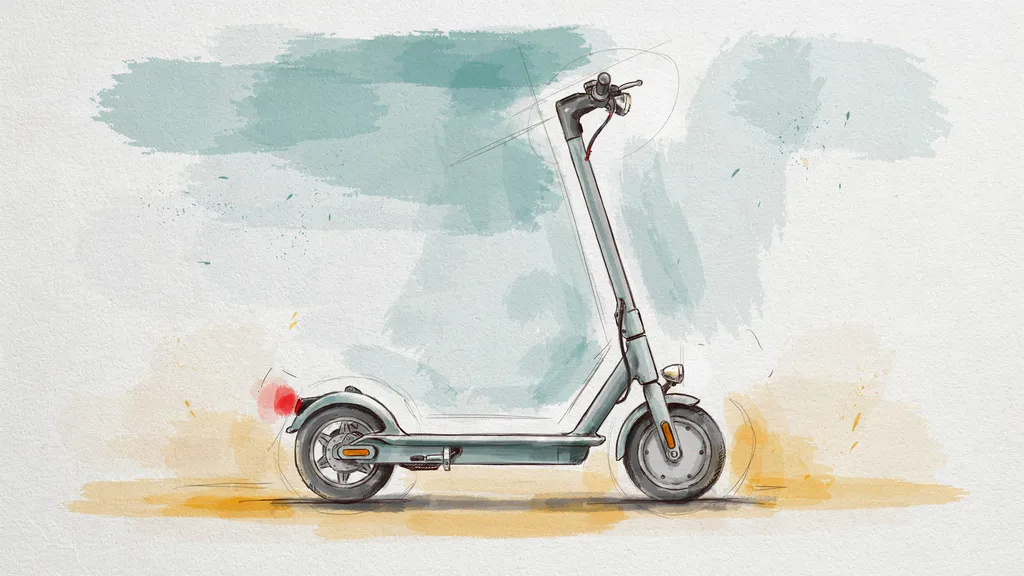
The 2024 Regulations set hard technical thresholds. A scooter that exceeds any single one of these is NOT a PPT — it's classified as an e-moped, with very different rules (see the e-moped trap section below).
| Requirement | Threshold |
|---|---|
| Max continuous rated motor power | 400 W |
| Max design speed | 20 km/h |
| Max weight (incl. battery) | 25 kg |
| Minimum wheel diameter | 200 mm |
| CE marking | Required |
| Manufacturer's plate | Must certify power, weight, design speed |
| Declaration of Conformity | Retailer must provide at purchase |
| Lights | Front white, rear red — like a bicycle |
| Reflectors | Front, rear, side |
| Brakes | Two independent braking systems |
| Bell / audible warning | Required |
Keep the Declaration of Conformity that comes with the scooter — it's your proof of PPT classification if you're stopped. Many grey-market scooters don't come with one, which is a strong signal the vehicle isn't compliant.
Rider rules
- Minimum age 16. Under-16s cannot ride on public roads — scooters used by under-16s can be confiscated by Gardaí, and parents can face prosecution for allowing it
- No licence, insurance, tax or registration required for a compliant PPT
- Drive on the left, same as all Irish road users
- Obey all traffic signals, signs, pedestrian crossings — same rules as cyclists
- No mobile phone use while riding — even hands-free is discouraged
- No headphones / earbuds — you must be able to hear surrounding traffic
- One rider only — no passengers, adults or children
- No riding under the influence of alcohol or drugs. E-scooters fall under the Road Traffic Acts' drink-driving framework. Conviction carries fines and potential disqualification from driving (including a full car licence)
- Lights on between sunset and sunrise and in poor visibility, same as cyclists
Where you can — and cannot — ride
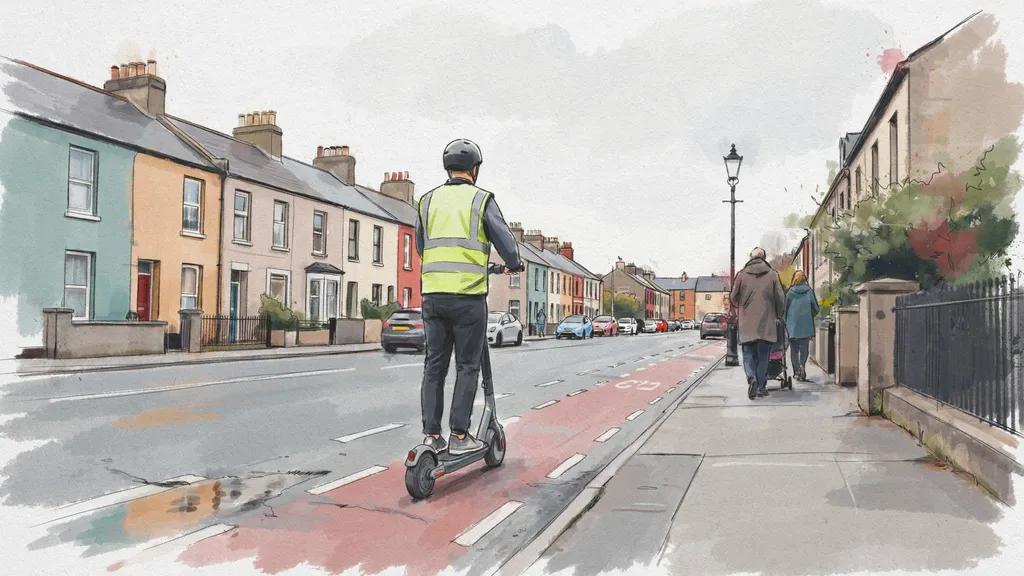
Allowed
- Public roads — local, regional, national (non-motorway)
- Cycle lanes (shared with bicycles)
- Bus lanes, where cyclists are permitted
- Shared paths designated for cycles
Prohibited
- Footpaths — riding on a footpath is a €60 FCN offence
- Pedestrianised areas (e.g. Grafton Street, Temple Bar pedestrian zones, Cork's St Patrick's Street)
- Motorways — same as cyclists, totally off-limits
- Public parks — many local authorities ban e-scooters in parks by byelaw. Check signs
Keep your speed reasonable on shared cycle infrastructure. Even though your PPT can do 20 km/h, a dense cycle lane at rush hour usually doesn't safely support scooters going faster than the surrounding cyclists. E-scooters are responsible for a growing share of urban collisions; courtesy and caution matter.
The October 2024 public transport ban
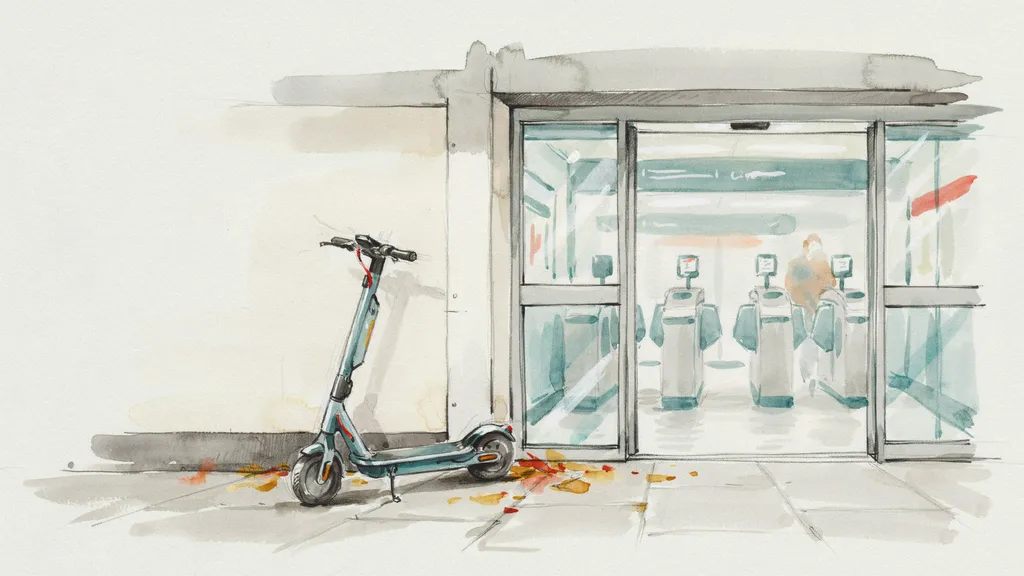
Since early October 2024, the NTA (National Transport Authority) has banned e-scooters and e-bikes with non-removable batteries from all coordinated public transport services in Ireland:
- Dublin Bus
- Go-Ahead Ireland
- Bus Éireann
- Iarnród Éireann (Irish Rail)
- Luas
- TFI Local Link
The reason: lithium-ion battery fire risk. Li-ion batteries in e-scooters and e-bikes can fail in "thermal runaway" events — fast, intense fires that are impossible to extinguish with standard handheld fire suppression. On a bus or train in an enclosed space with passengers, the risk profile is unacceptable. Several high-profile incidents in UK, US and EU transport networks drove the Irish decision.
Practical impact: if you use an e-scooter for last-mile commuting alongside public transport, you can't take it on the bus or train. You must either cycle/walk the whole way, or use the scooter only for the legs where it's the sole mode. This has genuinely reshaped urban Irish micromobility commutes. Removable-battery e-bikes are typically still permitted when the battery is carried separately — check each operator's current policy before travel.
Penalties
| Offence | Penalty |
|---|---|
| Riding on footpath / pedestrianised area | €60 FCN |
| No lights at night | €60 FCN |
| Under-16 rider | €60 FCN + possible scooter confiscation |
| Speeding (above 20 km/h design speed) | €60 FCN + potential scooter reclassification as e-moped |
| Carrying a passenger | €60 FCN |
| Using phone while riding | €60 FCN |
| Headphones while riding | €60 FCN |
| Using over-spec scooter (not a PPT) without registration | Vehicle seizure, fines, potential no-insurance prosecution (5 penalty points on car licence) |
| Dangerous / reckless riding | Prosecution, possible confiscation, larger fine on conviction |
| Riding under the influence | Criminal offence. Fines on summary conviction and potential disqualification from driving any vehicle (including car licence) |
Most PPT FCNs are €60. Drink-driving applies the full criminal framework — Gardaí can breath-test an e-scooter rider, and a conviction can disqualify you from driving your car.
The e-moped trap
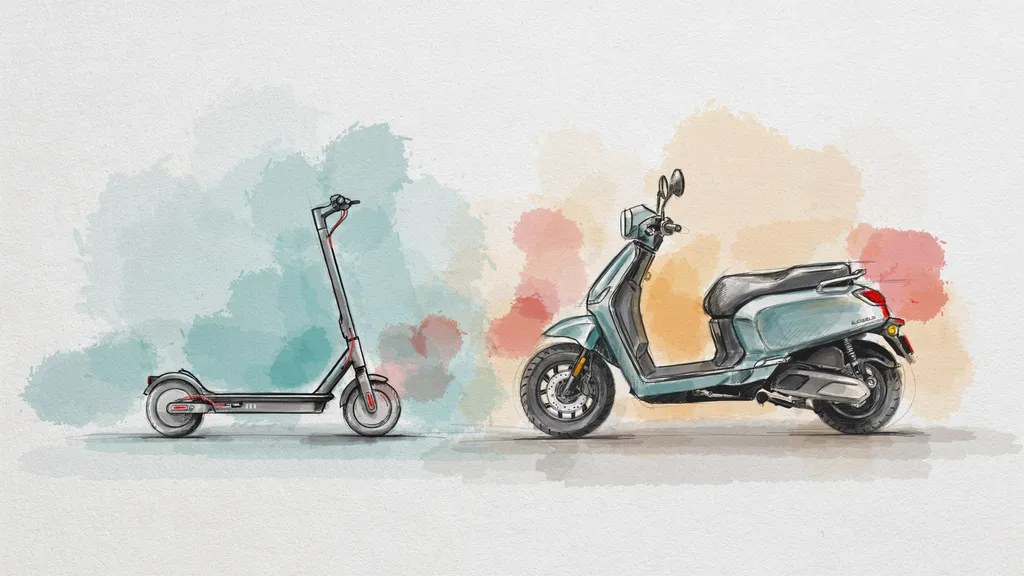
Many e-scooters sold online — especially from AliExpress, Amazon, Temu and direct-from-China brands — exceed the 400W, 20 km/h or 25kg limits. These are not PPTs. Under Irish law they're e-mopeds (category L1e-B) and require:
- Vehicle registration with Revenue (VRT applies)
- Motor tax
- Category AM driving licence (minimum age 16, theory test required)
- Motor insurance — any mechanically propelled vehicle on a public road must be insured
- Motorcycle helmet
Riding an unregistered e-moped on an Irish road risks: vehicle seizure, fines, and prosecution for no insurance — which carries 5 penalty points on your driving licence and disqualification on a repeat offence.
How to avoid the trap
- Check the manufacturer's plate before buying. Legitimate PPTs certify continuous power, design speed and weight on the plate
- Ask the retailer for a CE Declaration of Conformity. No Declaration = not a PPT
- Be very wary of listings advertising "can be unlocked to 25 / 30 / 40 km/h". Software-unlocking beyond 20 km/h makes the scooter illegal as a PPT on Irish roads — even if you ride it slowly
- Buy from Irish retailers who specifically market their scooters as "Irish road legal" — they typically include the Declaration and stand behind the spec
- Heavier is not better. If a spec sheet says 30+ kg, it's already out of PPT range regardless of power or speed
E-bikes — for completeness
E-bikes aren't PPTs — they have their own rules, which also changed with the 2023 Act:
| Type | Classification | Licence / Insurance |
|---|---|---|
| Pedal-assist (EPAC): ≤250W continuous power, assistance cuts off at 25 km/h | Regular bicycle | None required |
| Throttle-only e-bike: motor drives without pedalling | E-moped (L1e-B) | Registration, AM licence, insurance, helmet |
| High-power e-bike: >250W continuous or >25 km/h assistance | E-moped (L1e-B) | Registration, AM licence, insurance, helmet |
The critical line for e-bikes is pedal-assist only, 250W continuous, 25 km/h cut-off. Anything beyond that is regulated like a small motorbike. Many "e-bike" listings online — especially throttle-driven ones — cross this threshold.
Insurance and compensation
The biggest practical gap in the PPT regime: no compulsory insurance. If you injure someone on an e-scooter, or cause property damage, the victim's options are limited:
- Civil claim against the rider personally — slow, requires identifying the rider, and collection depends on their personal means
- No MIBI cover — MIBI covers uninsured mechanically propelled vehicles that were required to be insured. PPTs aren't required to be insured, so they fall outside MIBI. See our car accident guide for how MIBI normally works
- Your own insurance may help in some cases — household contents policies often include personal liability cover; check the wording
- Health insurance covers your medical treatment regardless
As a rider: consider whether your home contents policy covers e-scooter liability (many do up to a cap). If you use an e-scooter regularly, specific e-scooter liability insurance is becoming available from some Irish brokers — typically €30–€60/year.
As a driver: if you're hit by an e-scooter rider while driving your car, your own motor policy's uninsured-driver and personal-injury cover may apply. Check your policy schedule. See our car insurance Irelandguide for the general claim process.
Buying tips — the 2-minute pre-purchase check
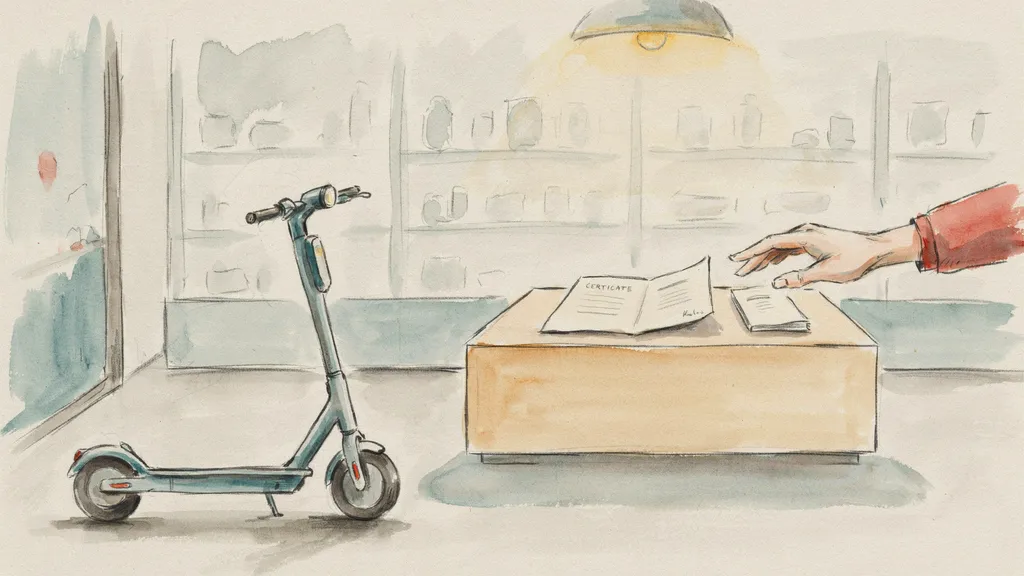
- Find the manufacturer's plate (usually on the stem or deck). It should state continuous rated power, design speed, and weight
- Verify: ≤400W, ≤20 km/h, ≤25 kg, wheels ≥200mm. Any single spec over the line = not a PPT
- Ask for the CE Declaration of Conformity. If the seller can't produce one, walk away
- Check for required safety equipment: front + rear lights, reflectors, 2 brakes, bell
- Be suspicious of "unlockable" speeds. If a listing or review says the scooter can be re-flashed to 30+ km/h, the manufacturer intended it for non-PPT markets. Ireland-legal operation at 20 km/h doesn't negate the classification risk — the design speed on the plate is what counts
- Buy from an Irish retailer with a physical shop or established online presence. They typically honour warranty and understand PPT compliance
- Avoid AliExpress / Temu deals under €300 — almost all are out of PPT range on at least one spec
- Check battery removability if you plan any public transport — a removable battery means you can transport the scooter sometimes (with battery separate), though whole-unit transport is still banned
What's coming (Aug–Sep 2026)
After the first full year of real-world use — and a reported ~50% year-on-year rise in child brain-injury admissions, 1,412 e-scooter seizures and 793 prosecutions in 2026 alone — the Government announced on 21 July 2026 that it will regulate rather than ban e-scooters, with a markedly stricter regime. A blanket ban remains on the table as a future option. These measures have commencement dates attached but are not yet enacted law, and dates may slip:
- Age 16 → 18 (expected August 2026), with penalties for parents who buy e-scooters for under-18s
- Mandatory helmet + hi-vis vest for all riders (expected August 2026)
- Higher fixed-charge fines, up from the current €50–€60 per offence
- Licensing & a national e-scooter register — legislation due from September 2026, reclassifying e-scooters as mechanically propelled vehicles, applied retroactively to scooters already owned. Tax and insurance requirements are under consideration
- Sales bans — no selling e-scooters to children, and no selling over-spec / too-fast machines that aren't road-legal, with new pressure on retailers
- Stronger Garda enforcement — expanded powers and clearer pursuit rules, potentially modelled on the UK approach
Still on the longer-term agenda from the original review: software-unlock speed compliance and roadside spec checks, footpath parking / abandonmentbyelaws, the urban 30 km/h default under the Road Traffic Act 2024 (see our speed limits Ireland guide), and any future shared e-scooter scheme pilots, which would need their own framework. Confirm the current position at rsa.ie and citizensinformation.ie before you buy or ride.
E-scooter for short trips, car for everything else?
If you're using an e-scooter for the last mile and a car for longer journeys, odo.ie is the Irish app that keeps the driving admin out of your head — NCT, motor tax, insurance renewals, service history, running costs. Solo free forever for one vehicle, Family €4/mo for 3. No ads, no data selling.