Irish Revenue requires a detailed mileage log — date, origin, destination, distance, purpose — retained for 6 years. Civil service rates (unchanged since 1 September 2022) run across 3 engine bands (up to 1200cc / 1201–1500cc / 1501cc+) and 4 distance bands (0–1500 / 1501–5500 / 5501–25,000 / 25,001+ km) applied cumulatively across the tax year. Electric vehicles claim under the 1201–1500cc column. odo.ie Pro's trip logbook records each trip as Business / Commute / Private, applies period filters (month / YTD / year / custom-year), and exports CSV + PDF scoped to the active period — designed for Irish accountant hand-off. Pro is €8/month or €6/month billed yearly (two months free on annual); Solo free for 1 vehicle and Family €4/month for 3 vehicles with co-driver sharing keep the core reminder / service / fuel / receipts features at a lower tier. See odo.ie/pro.
Who needs an Irish mileage logbook
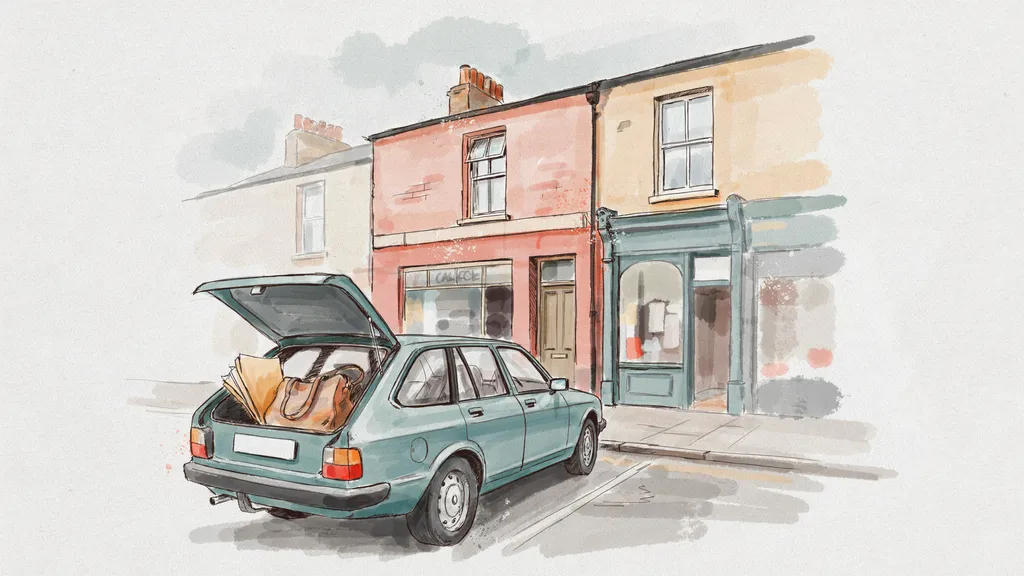
Not everyone who owns a car claims mileage — but if you do, the logbook is not optional. It's the evidence base for every claim. The people who genuinely need one:
- Company directors claiming mileage from their own company at civil service rates — director-employed trips
- Employees reimbursed at civil service rates — site visits, client meetings, conferences, training days where the employer pays travel on Revenue-approved rates
- Sole traders tracking actual motor expenses — where you need to prove the business-use percentage of your total motoring costs for your Form 11
- Company-car drivers — under the BIK regime, your benefit-in-kind tax rate depends on your business mileage for the year. Our Company Car BIK Ireland guide covers the 2026 rate table and why business mileage is directly in your pocket
- Contractors and consultants — where your invoice to the client includes mileage at civil service rates
- Anyone with a second-employment claim for travel between workplaces (not commute from home)
What Revenue actually requires

Revenue's guidance is specific about the minimum content of a business mileage log. For every trip you claim:
- Date of the trip
- Starting point (address or named location)
- Destination (address or named location)
- Business purpose — why the trip was made (meeting client X, inspecting site Y, attending conference Z). "Work" is not enough
- Distance in kilometres
- Vehicle engine size and CO2 / EV status — because it determines which rate column applies
- Cumulative year-to-date business distance — the rate changes as you cross band thresholds, so running totals matter
Records must be kept for 6 years from the end of the relevant tax year. If Revenue opens an audit, the logbook is the primary evidence — a rough memory of "I did about 800 km this month" will not support a claim.
Revenue routinely samples mileage claims — especially large ones, consistent-round-number ones (suspicious), and ones that don't reconcile with fuel receipts or vehicle odometer readings. Disallowed claims are treated as under-declared income or over-claimed expenses: the amount is added back and interest + penalties apply. The cost of a bad logbook far exceeds the price of a good tool.
Current civil service rates — quick reference
The Department of Public Expenditure's civil service rates have been in force since 1 September 2022 and remain the approved rates for Revenue-reimbursed business travel in April 2026. Three engine bands, four distance bands, applied cumulatively in the tax year:
| Cumulative km (tax year) | Up to 1200cc | 1201–1500cc (& EV) | 1501cc+ |
|---|---|---|---|
| 0 – 1,500 km | 41.80 c/km | 43.40 c/km | 51.82 c/km |
| 1,501 – 5,500 km | 72.64 c/km | 79.18 c/km | 90.63 c/km |
| 5,501 – 25,000 km | 31.78 c/km | 31.79 c/km | 39.22 c/km |
| 25,001 km+ | 20.56 c/km | 23.85 c/km | 25.87 c/km |
EV drivers claim under the 1201–1500cc column — there's no separate flat EV rate. For complete rate tables including Reduced Rates (training/course travel), eating-on-site, overnight and subsistence rates, see our Mileage Rates Irelandguide.
The current options — and their problems
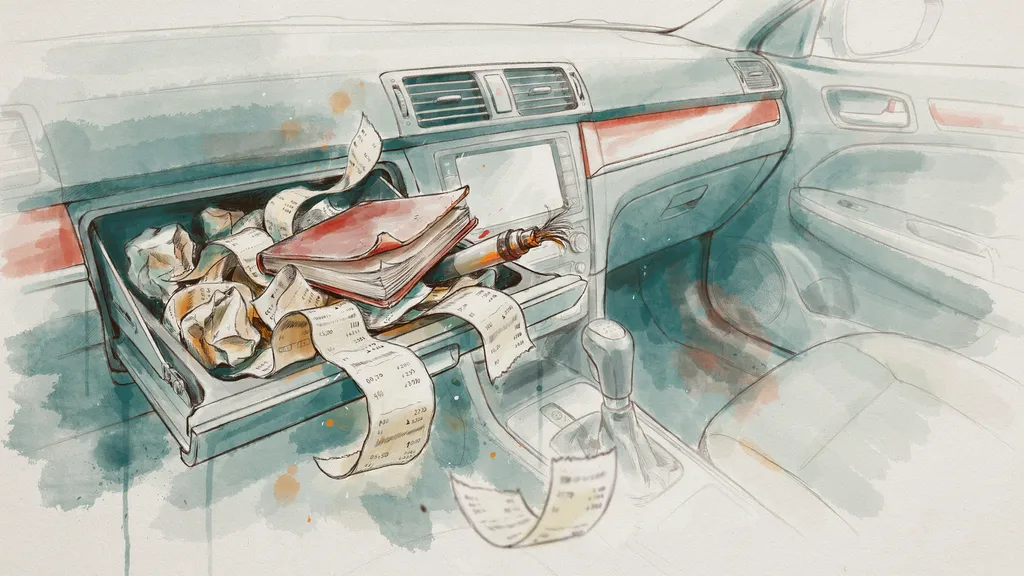
Without a dedicated tool, Irish drivers claiming mileage usually fall into one of four patterns:
- A notebook in the glovebox — accurate at the moment of logging, but the notebook gets lost, smudged or left at home. Entries become illegible. At year-end, the accountant spends an hour decoding it for you at her hourly rate
- A spreadsheet — better, but tedious. Every trip is a fresh row. Columns for date / from / to / km / purpose / engine band, and you forget to update the running total. Six years of backups if you actually want records Revenue will accept
- MileIQ, Driversnote or TripLog — solid international apps but none of them natively implement the Irish four-band civil service rate structure. MileIQ uses a single user-set rate (IRS-style, flat). Driversnote supports many countries but historically hasn't had the full Irish banded structure built in. TripLog is US/UK-centric
- Nothing — the most common option. "I'll remember." A significant percentage of Irish small-business motoring claims are supported by no logbook at all, and those are the claims Revenue targets in an audit
How odo.ie Pro's trip logbook works
The logbook is designed around how Irish mileage claims actually work — three trip types, period filters, categorical totals, and a PDF export your accountant will recognise on sight.
Trip types
- Business — work journeys: client visits, site inspections, meetings, conferences, supplier collections, training. Employees and directors may apply civil service rates; sole traders use these km for the Form 11 business-use %
- Commute — home-to-main-workplace. Not reclaimable at civil service rates and usually not business for Form 11, but tracked separately
- Private — personal driving. Sole traders need this in the denominator of the business-use percentage — the logbook computes the ratio across any period
Logged fields per trip
- Date + time
- From (starting point)
- To (destination)
- Distance (km, entered directly or via a simple calculation if round-trip)
- Purpose (free-text — the Revenue-required "business purpose")
- Route (optional, for trips where specific route matters)
- Vehicle (if you have multiple cars, logged per vehicle)
- Trip type (Business / Commute / Private)
Period filters
The logbook's period selector lets you view any of:
- This month (current)
- Last month
- Last 3 months
- Year-to-date
- Last year
- Any specific year with data (dynamic "year pills" appear for every historical year)
The category totals (Business / Commute / Private km) update instantly when you switch period, and so does the export. Custom date ranges are on the roadmap.
Exports
- CSV — every trip row, filterable in a spreadsheet, matching the Revenue-required fields. Ideal for reconciling against fuel receipts or client invoices
- Print-ready PDF — period-scoped, categorised by trip type, with totals per category and a summary row for the whole period. Designed to drop straight onto an Irish accountant's desk
The logbook gives you total business and commute km for the period; the euro conversion multiplies by the applicable civil service rate at the appropriate band. Because the rate depends on engine size and cumulative year-to-date km, this step is best confirmed by your accountant using our mileage rates Irelandguide as the reference. odo.ie gives you the km; your accountant applies the rate.
A typical month with odo.ie Pro

- Tuesday morning: drive to a client site in Galway. In the car park afterwards, open odo.ie on your phone, tap "Add trip", enter Dublin → Galway client-meeting, 210 km, Business. 30 seconds
- Wednesday afternoon: collect office supplies from a supplier. Add trip: office → supplier, 18 km, Business
- Friday: normal commute. Add trip: home → office, 28 km, Commute (not claimable but tracked)
- Saturday: school sports + shopping. Add trip: 45 km total, Private
- End of month: switch the period selector to "This month". Business total = 250 km. Commute = 140 km. Private = 180 km. Export PDF
- Tax time: switch to "Year to date" or "Last year". Export PDF. Email to your accountant. Your claim is backed with a documented, date-stamped, period-scoped record
odo.ie vs MileIQ, Driversnote and TripLog
The international apps are mature and genuinely good — but none of them are Irish. For Irish drivers specifically:
| Feature | odo.ie Pro | MileIQ | Driversnote | TripLog |
|---|---|---|---|---|
| Irish civil service 4-band distance structure | Purpose-built | Single rate | Limited | US/UK focus |
| Irish 3-band engine (incl. EV → 1201–1500cc) | ✅ | ❌ | Partial | ❌ |
| Business / Commute / Private categories | ✅ | ✅ (2-class) | ✅ | ✅ |
| Manual logging (no battery drain) | ✅ | GPS (battery) | GPS (battery) | GPS (battery) |
| Sits alongside service / fuel / cost logs | ✅ | ❌ | ❌ | ❌ |
| PDF export designed for Irish accountants | ✅ | Generic | Generic | Generic |
| Built in Ireland, EU data residency | ✅ | US-based | EU (not IE) | US-based |
The case for odo.ie Pro is simple: if you drive for business in Ireland, using a tool that understands Revenue's rules natively means your log is compliant by construction rather than by post-hoc formatting.
Pricing — does it pay back?
odo.ie Pro is €8/month or €6/month billed yearly(two months free on the annual plan). For most Irish business drivers, the logbook alone justifies the subscription:
- One hour of accountant time at year-end typically costs €80–€150 — more than a full Pro annual subscription
- A single disallowed mileage claim in an audit can cost hundreds, plus interest and penalties
- Business-use-percentage documentation for sole traders can save €500–€2,000/year in legitimately claimed motor expenses — money left on the table without a clean record
- BIK-band documentation for company-car drivers — under the 2026 rules, moving from the highest business-mileage band to the lowest costs about 9 percentage points of OMV. On a €40,000 car, that's ~€3,600/year of BIK. Clean logs directly protect your payroll
Pro is live at odo.ie/pro — €8/month or €6/month billed yearly. Start the trip logbook whenever you are ready.
Start logging your business trips — your accountant will thank you
odo.ie Pro's trip logbook is live: Business / Commute / Private on every trip, tax-year PDF and accountant CSV, sitting alongside your fuel and service history. The first Irish-built mileage tracker that understands Revenue's banded rate structure natively. Solo stays free forever for one vehicle.