Cover tiers: third-party only (legal minimum, cheapest, no own-bike cover), third-party fire & theft (most common Irish tier), comprehensive. Typical 2026 costs: €300–€600 for experienced riders over 30 on smaller A1/A2 bikes; €800–€1,500+ for riders under 25, novices, or unrestricted Category A bikes. Biggest single premium-reducer: garage / shed storage vs on-street. Other savers: Thatcham- approved chain + disc lock + ground anchor; GPS tracker; accurate mileage declaration; advanced-rider courses; multi-vehicle policies combining car + bike. Critical: declare everymodification; keep the policy in force through winter storage (theft/fire risk remains) using a lay-up arrangement if available. Motorcycle NCB is separate from car NCB — good car history may buy an introductory discount but doesn't transfer year-for-year.
How Irish motorcycle insurance works
The three cover tiers
- Third-Party Only (TPO) — the legal minimum. Covers injury or damage you cause to other people and their property. No cover for your own bike if you crash or it's stolen. Cheapest tier — typically 30–50% below comprehensive — but exposes you to the full cost of replacing your bike after a total loss.
- Third-Party Fire & Theft (TPFT) — adds cover for your bike being stolen or damaged by fire. The most common Irish motorcycle policy tier, especially for older or lower-value bikes where full accident-damage cover would be more expensive than the bike is worth.
- Comprehensive (Comp) — adds cover for your own damage in a crash, vandalism, windscreen (on faired bikes), personal effects, and often short-term European touring cover. Typical choice for newer or higher-value bikes, and for experienced riders who want protection across all eventualities.
Named rider vs any rider
Most Irish motorcycle policies are named rider only — you (and any explicitly named additional riders) are the only people insured to ride the bike. Lending your bike to a friend on a named-rider policy is a material cover breach. Some insurers offerany licensed rider cover on specific policies, usually at a higher premium and with conditions (minimum age, minimum years held full licence, etc.).
Pillion cover
Pillion (passenger) cover is NOT automatic on every motorcycle policy. Read the policy wording before you carry a passenger — the schedule will either explicitly include pillion, exclude it, or charge a premium for it. Carrying a pillion on an excluded policy leaves you and the passenger uninsured; after a crash, this can be devastating.
The driver-number rule
Since 31 March 2025 the Road Traffic and Roads Act 2023 requires your Irish driver number to be recorded against the policy for the policyholder and every named rider. Motorcycle policies are covered by this requirement the same way car policies are. Check our Irish car insurance guide for the background on the driver- number rule.
Typical 2026 Irish motorcycle insurance costs
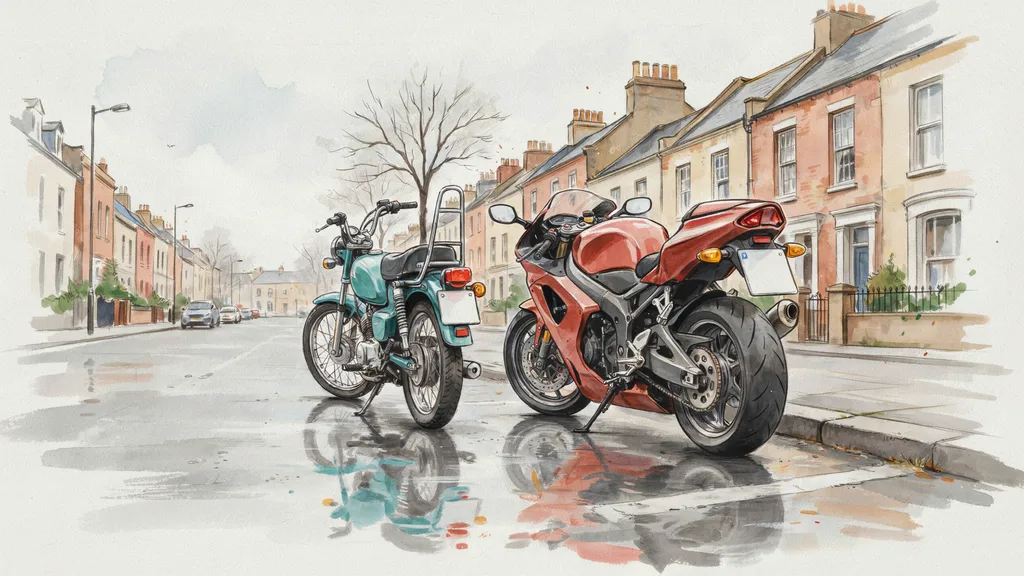
Real-world quotes vary enormously by rider profile. The figures below are indicative 2026 market ranges based on quote samples across major Irish insurers and brokers — always get multiple quotes for your specific profile.
| Rider profile | Bike | Typical annual premium (TPFT) | Typical annual premium (Comp) |
|---|---|---|---|
| 35+, full A licence, 5+ years NCB, garage-kept, low mileage | 125cc commuter / A1 125cc | €250–€450 | €350–€600 |
| 30+, full A licence, 3+ years NCB | A2 mid-range (350–650cc) | €400–€650 | €550–€900 |
| 30+, full A licence, 5+ years NCB | Unrestricted A (700–1200cc, touring / ADV) | €500–€850 | €700–€1,300 |
| 25–30, 1–2 years novice-to-full transition | A2 mid-range | €600–€1,000 | €800–€1,400 |
| Under 25, newly-qualified | A1 / A2 restricted | €700–€1,200 | €1,000–€1,800+ |
| Under 25, full A licence | Unrestricted sport bike | €1,200–€2,500+ | €1,500–€3,500+ |
| Learner permit holder (any age) | A1 / AM compliant | €400–€900 | €600–€1,200 |
Unrestricted A sports bikes (superbikes, high-power inline fours) attract the highest premiums of any motorcycle class — both because the theft risk is high and because the crash-severity profile is statistically worst. A mid-sized adventure-tourer or naked bike of equivalent cc often insures for 30–40% less than a sports bike of the same power.
Irish motorcycle insurers and brokers
The Irish market has a mix of motorcycle-specialist brokers and general insurers. Always quote at least three before renewing.
- Carole Nash — UK-founded motorcycle specialist with a dedicated Irish operation. Strong on classics (agreed-value cover), big-bike enthusiasts, multi-bike policies and optional breakdown cover
- Principal Insurance — Irish broker panel including motorcycle-specific policies; widely used by newly-qualified and novice riders
- Liberty Insurance — general insurer with motorcycle policies for mainstream rider profiles
- AXA Ireland — general insurer; bike cover alongside car cover; good on multi-vehicle discounts when combined with AXA car policy
- Allianz Ireland — general insurer with motorcycle cover on standard profiles; multi-vehicle discount available
- BeMoto — UK-based motorcycle specialist covering ROI; strong in track-day and sports-bike niches; agreed-value options
- Insuremybike.ie — online broker / comparison service aggregating multiple motorcycle insurers into one quote process
For specialist needs — classic, race / track day, stunt, delivery / courier, dispatch rider — a motorcycle broker will place you with a suitable underwriter better than a mainstream insurer's self-service quote flow will. Don't assume your best-known insurer has the best bike quote.
What affects your premium
- Age — under 25 attracts the steepest loading; premiums step down at 25, 30, 35 and 40
- Licence type — learner > novice (first 2 years of full licence) > full licence held 2+ years
- Licence category — AM < A1 < A2 < unrestricted A (progressive access typically costs no more than direct-access at the same category)
- Engine size & bike value — not quite linear; underwriters also weight the bike's theft-risk rating and crash-severity class
- No-claims bonus — separate for motorcycles; 60–80% discount after 5 years clean; see our NCB guide for mechanics
- Security — locked garage / shed, Thatcham-approved chain + disc lock + ground anchor, GPS tracker. Biggest single lever for most riders
- Annual mileage — many Irish riders do under 5,000km/year; accurate (low) mileage declarations reduce premiums
- Location — Dublin highest premium, urban centres next, rural addresses lowest (theft risk and traffic density both factor in)
- Modifications — must all be declared; most increase premiums, some (security) reduce them
- Storage — overnight location drives theft-risk assessment more than any other single factor
- Usage — social / domestic / pleasure vs commute vs business / delivery; couriers and delivery riders pay significantly more
- Previous claims — a fault claim adds a loading for 3–5 years; a theft claim can make renewal difficult until clean history is rebuilt
How to save — the practical levers
1. Build no-claims bonus
Motorcycle NCB works like car NCB: typical discount ladder is 20% after 1 claim-free year, rising to ~60% after 5 years, capped around 65–80% depending on insurer. Protect it (paid add-on on most policies) if you can — one at-fault claim without protection can knock 2 years off your ladder. Critical: motorcycle NCB is separate from car NCB. You can't usually transfer years from car to bike (though some insurers offer an introductory discount for proven car-driving history).
2. Store it securely
Biggest single premium-reducer for most riders. Moving from on-street overnight parking to a locked garage or shed — even a rented lock-up — typically cuts premiums 30–50%. Declare accurately: "locked garage" means locked, walled, and accessed only by you or household members. A shared apartment bike store usually doesn't meet the definition; quote it correctly.
3. Thatcham-approved security
The Thatcham approval scheme categorises motorcycle locks, immobilisers and trackers. Many insurers explicitly require Thatcham-approved security on higher-value bikes; a combined chain-to-ground-anchor + disc-lock + electronic immobiliser set-up at Thatcham category 5 or 6 can qualify for 15–25% discount on top of the garage reduction. Ask the insurer which specific devices they accept before you buy.
4. Fit a GPS tracker
GPS trackers like Monimoto, Datatool TrakKING / S4, or Scorpion ScorpionTrack both reduce premiums (5–15% typical) and dramatically improve recovery rates after theft. Monimoto is the popular DIY option — relatively cheap up-front, subscription- based, no installation required; Datatool and Scorpion offer professionally-installed systems with Thatcham category 6 or 7 approval that higher-end insurers may require on valuable bikes.
5. Declare mileage accurately
Many Irish riders do less than 5,000km/year. Declaring accurate (low) mileage can reduce premiums 10–20% compared to the default "average" band. Don't under-declare — if a claim reveals mileage materially above what you told the insurer, cover can be voided. Track it honestly in odo.ie (see CTA below).
6. Advanced-rider courses
IAM RoadSmart (the Irish-active wing of the UK-founded Institute of Advanced Motorists) andBikeSafe (Garda-assessed riding day) improve your skill AND, for some insurers, qualify for 5–10% discount. Check with your insurer before paying — not all accept all courses, and the discount sometimes kicks in only on the next renewal after completion.
7. Multi-vehicle policies
Some insurers offer 5–15% discount when you put car and motorcycle on one household policy. Check both the bundled price and the sum of two standalone quotes — occasionally the standalone route wins.
8. Lay-up / winter cover
See the dedicated section below. For winter-stored bikes, switching from full road cover to fire/theft-only for 4–5 off-road months typically cuts the annualised premium 15–25%.
9. Agreed-value cover (classics & modifieds)
For a classic or meaningfully-modified bike, market-value claims settlements often leave owners significantly out of pocket because the Irish market for a specific pre-1990 or heavily-customised bike is thin. Agreed- value policies — offered by Carole Nash, BeMoto and some specialists — fix a settlement figure up-front in return for documentation (photos, valuation, receipts for mods). Essential for a €15,000 restoration that a generic market valuer would book at €6,000.
10. Shop every renewal — never auto-renew
Auto-renewal quotes in Ireland have been shown repeatedly to be 15–40% higher than fresh quotes on identical risks. Set a renewal reminder 30 days out (see CTA), get three quotes minimum, and negotiate with your existing insurer using the best competing quote. See the car insurance guide for the same principle on the car side.
Modifications — declare everything
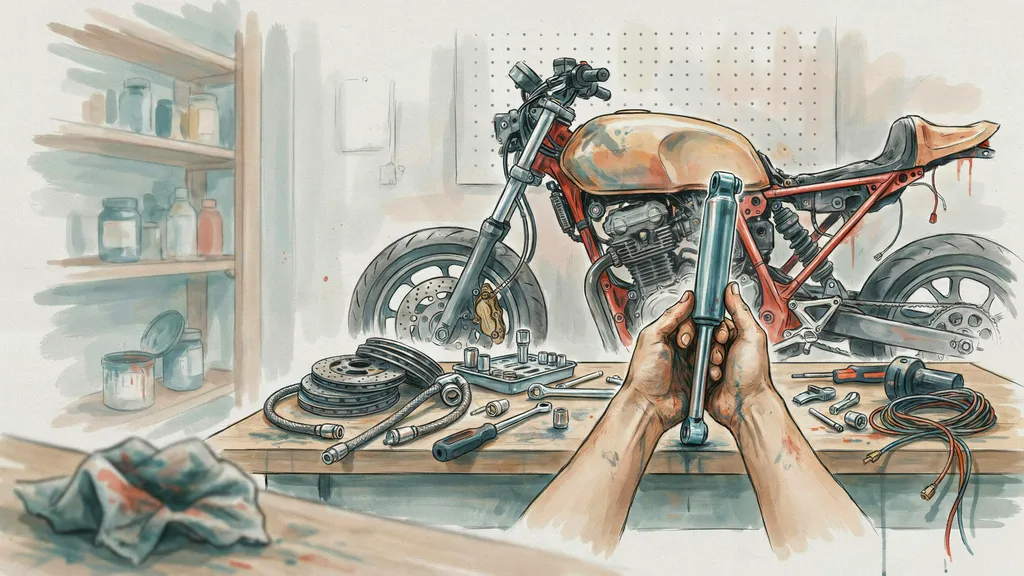
An undeclared modification is grounds for an insurer to treat the policy as voided from inception — meaning not only that a current claim is refused but that any third-party settlement the insurer already paid can be recovered from you. Don't guess. Declare it.
"Modification" is defined broadly. Everything below counts and should be on the proposal:
- Exhaust — aftermarket slip-on or full system
- ECU remap / power commander / fuelling changes
- Air filter / induction — K&N, Pipercross etc.
- Suspension — upgraded shocks, fork internals, cartridge kits
- Brakes — upgraded master cylinder, calipers, discs, lines
- Tyres — track-only tyres on a road bike
- Crash bungs / engine bars / radiator guards
- Tail tidy / fender eliminator
- Screen / windshield / hugger — aftermarket
- Handlebars / rearsets / levers
- Wheels — aftermarket alloys
- Paint / wrap / graphics — non-OEM respray
- Heated grips / navigation mounts / cameras / phone chargers — accessories rather than modifications but still declare if permanently wired
- Security devices — chain / disc lock / tracker / alarm (reduces premium, still declare)
Some insurers are more tolerant of mods than others. Carole Nash and BeMoto specifically market themselves to the modified-bike and custom-build segment. Mainstream insurers may refuse cover or load the premium significantly once you start listing mods. Shop accordingly.
Theft risk & security
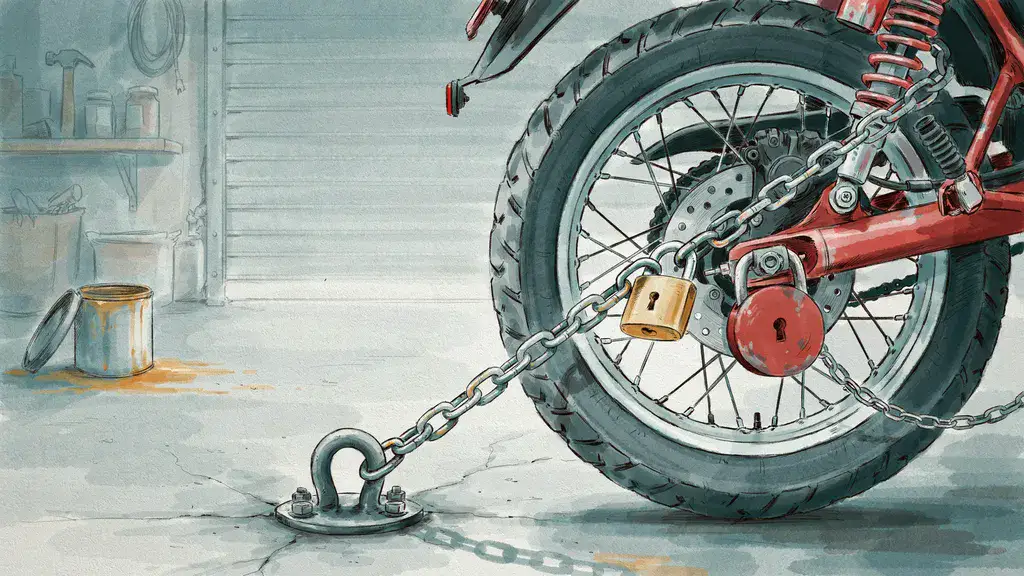
Motorcycles are disproportionately stolen relative to cars in Ireland, with Dublin the highest-risk urban area. Factors:
- Portability — two or three people can physically lift a motorcycle into a van in under a minute
- Parts market — even a bike that won't start cleanly has high parts value (engine, wheels, electronics, bodywork)
- Easier to conceal than a stolen car
- On-street overnight storage — far more common for motorcycles than for cars
Practical security layers:
- Heavy chain through the frame to a ground anchor — Thatcham-approved Almax, Pragmasis, Oxford etc.
- Disc lock with alarm on a front disc — adds noise when tampered with
- Locked garage / shed — ideally with additional chain anchor inside
- GPS tracker — Monimoto / Datatool / Scorpion — recovery + premium reduction
- Cover — even a plain cover deters opportunistic theft because the thief can't see what they're targeting
- Mark parts with Datatag or similar — deters professional thieves because marked parts are harder to move through the grey market
- Vary parking location if you must park on-street — don't always leave the bike in exactly the same spot
- Report suspicious interest — a stranger photographing your bike on the street is a reconnaissance signal
Lay-up / winter cover
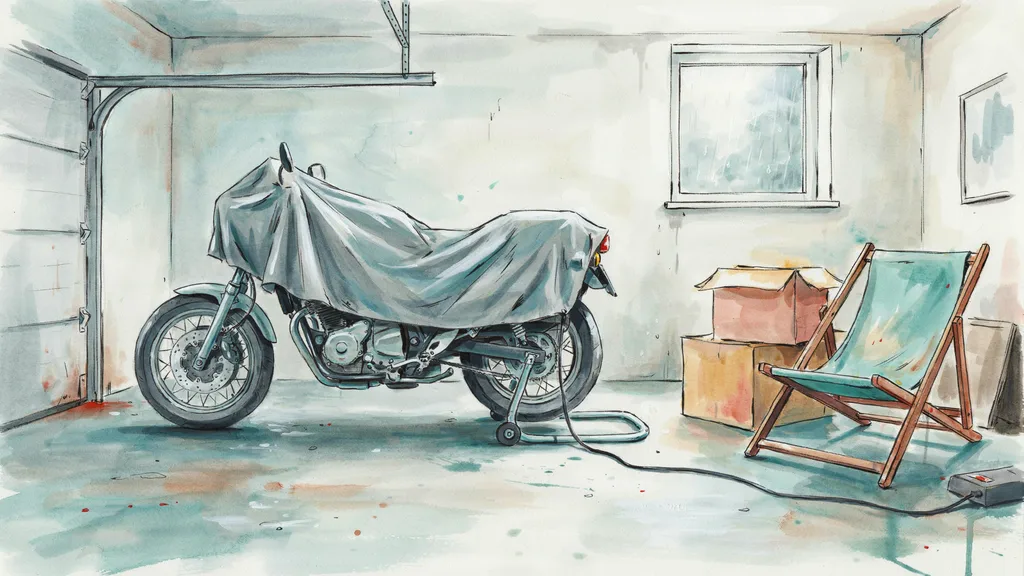
If you don't ride November–March, you don't need full road-risk cover during those months — but you absolutely do want theft and fire cover because those risks remain. Irish options:
- Lay-up endorsement — some Irish insurers formally offer a lay-up endorsement that removes road-risk cover for a declared off-road period (typically 4–5 months) while keeping theft / fire / accidental-damage cover. Premium for the off-road months is typically 30–50% of the equivalent annualised road-risk rate. Ask at quote / renewal.
- Full annual cover through winter — simpler, and if your insurer doesn't offer lay-up, this is the fallback. Don't cancel winter cover outright — the bike is still at risk of theft, fire and flood in storage.
- Fire / theft only policy — a very small number of specialists sell standalone fire-and-theft-only cover for stored vehicles; availability varies year to year.
- RF150 off-road declaration — stops your motor tax (not insurance) during declared off-road months. Useful in combination with a lay-up endorsement. See our RF150 guidefor the filing rules (must declare in advance, not retrospectively since 2013).
A stored bike is still at risk of theft, fire, flood, water-damage from a burst pipe, and accidental damage from a DIY slip with a spanner or trolley jack. An uninsured bike that's stolen from your garage is a total loss. Keep theft / fire cover in place even if road-risk comes off — it's the last cover layer you should cut.
Set your motorcycle insurance renewal reminder in odo.ie — never auto-renew without comparing quotes first.
Track motorcycle renewal 30 / 14 / 7 / 1 days out with the same reminder stack that handles motor tax and NCT for your car. Solo free for 1 vehicle; Family €4/month (or €3/month billed yearly) for 3 vehicles (bike + car + commuter); Pro €8/month (or €6/month billed yearly) for 10 vehicles. .ics calendar sync, daily email digest when something needs attention, Revenue-ready trip logbook on Pro, 77+ Irish guides, no ads ever, EU data residency.