Calculator
Enter the car's on-the-road price, your deposit (cash plus any trade-in), the term in months, and the APR + GMFV you've been quoted (or use our May 2026 typical defaults). The calculator computes proper PCP balloon-amortisation alongside HP and credit union, and reveals total cost of credit for each — the figure that actually compares the routes.
PCP vs HP vs Credit Union — the three routes
Most Irish car-finance journeys end at one of three doors:
| Feature | PCP | HP | Credit Union |
|---|---|---|---|
| Provider | Manufacturer finance arm (VW FS, BMW Financial, Toyota Financial, etc.) | Bank, finance house or VW FS / dealer-arranged | Member-owned credit union (geographic / employer) |
| Term-end ownership | Optional — pay balloon to own, or return | Yes — automatic ownership at end | Yes — automatic ownership at end |
| Monthly payment | Lowest (because of balloon) | Higher than PCP | Similar to HP |
| End-of-term decision needed? | Yes — buy / return / refinance | No | No |
| Negative-equity risk | Real if car worth less than GMFV | Minimal — you own the car | Minimal — you own the car |
| Mileage limit | Yes — exceeding triggers extra charges | None | None |
| Typical APR May 2026 | 0–6.9% | 5.85–8.78% | 3.95–12% (avg 7.7%) |
| Statutory protection | Consumer Credit Act 1995 | Consumer Credit Act 1995 | Credit Union Act 1997 |
The headline trade-off: PCP wins on monthly payment, loses on end-of-term flexibility (and total cost if you keep the car). HP and credit union loans give you a finished car at term-end with no negotiations or surprise GMFV calculations.
How PCP actually works (and where it bites)
A PCP contract has four moving parts:

- Deposit — typically 10–30% of the car's price (manufacturer-subsidised offers often require minimum 25%).
- Monthly payments — equal instalments over 24, 36 or 48 months. These cover the depreciation portion of the financed amount + interest on the full financed amount.
- GMFV (Guaranteed Minimum Future Value) — the balloon. Set at signing based on projected residual value at term-end given expected mileage and condition. Typically 30–50% of the original car price.
- End-of-term decision — three doors: (a) pay the GMFV and keep the car; (b) hand the car back and walk away; (c) trade in and roll into a new PCP, with any positive equity (current value − GMFV) becoming deposit on the new PCP.
Mileage: PCP contracts cap annual km (often 16,000–20,000 km/yr). Exceed it and excess-mileage charges kick in (€0.05–€0.15 per km over the cap). Multiply across 3 years and €0.10/km × 30,000 km = €3,000.
Condition: at return, the car is inspected against a Trade Body fair-wear-and-tear standard. Beyond-fair charges apply for kerbed wheels, interior wear, paint chips, etc.
Negative equity: if the actual market value at term-end is below the GMFV, the GMFV protects you (hand back, walk away). But if you want to keep the car or roll into a new PCP, you're underwater — no equity to use as new deposit.
The "perpetual rolling PCP": re-enter a new PCP every 3 years using the previous GMFV-equity as deposit. Many drivers never own a car outright — paying perpetual depreciation + interest. CCPC has flagged this as a consumer risk.
How HP works
Hire Purchase is the classic Irish car-finance route. You borrow (price − deposit), pay equal monthly instalments over 36–84 months, and own the car outright at the end of the term. The finance company holds title until the final payment; you can't sell or modify meaningfully without their permission while the loan is live.
Mechanically simpler than PCP — no balloon, no end-of-term decision, no mileage cap. The trade-off: higher monthly payment than equivalent PCP because you're amortising the full (price − deposit) rather than (price − deposit − GMFV).
HP is regulated under the Consumer Credit Act 1995. You have the statutory "half-rule" right — if you've paid half the total amount payable, you can voluntarily terminate without further liability (subject to fair-wear-and-tear). The half-rule kicks in earlier on HP than PCP because there's no balloon inflating the total payable.
HP providers in Ireland 2026: Bank of Ireland (5.85% EV / 6.3% other), VW Financial Services (4.9–6.9% typical, 0% on selected models), AIB (~8.78%), permanent tsb (asset finance), specialist dealers (varies, often dealer-arranged at higher APRs).
Credit union loans — the underused option
Credit unions are member-owned not-for-profit co-operatives. They don't have shareholders demanding profit margins, and their cost of capital flows back to members as lower loan rates. The result: car loan APRs that frequently undercut both PCP and HP, with no balloon, no mileage cap, and full ownership from day one (you buy the car outright with cash from the loan).
May 2026 credit union car loan rates seen in the market:
- Affinity Credit Union — EV at 3.95% APR (member-friendly, employer-based)
- Enfield Credit Union, St Paul's Garda Credit Union — 5% APR
- Croí Laighean Credit Union — "PCP buster" at 5.5% (5.64% APR)
- Member First Credit Union — Green Car Loan at 5.5% APR for EVs
- ILCU average — 7.7% APR (across all member unions)
- Maximum allowed — 12% (12.68% APR)
The catch: you must be a member of the relevant credit union (geographic catchment area or employer-based). Membership requires a small share account (typically €5+); affordability assessment is conservative; loan amount is tied to your savings record. Best for borrowers with clean credit history and an existing relationship — not a quick-decision route for someone who walked into a dealer and saw a PCP offer.
Real Irish APR ranges — May 2026
| Provider | Route | APR (May 2026) | Notes |
|---|---|---|---|
| VW Financial Services | PCP/HP | 4.9–6.9% | 0% APR available on promo models |
| Kia Credit | PCP | 0% APR (promo) | 261 offers — selected EVs |
| Nissan | PCP/HP | 5.9% finance offer | Mainstream model coverage |
| Bank of Ireland | HP | 5.85% (EV) / 6.3% (ICE) | Direct or via dealer |
| Bank of Ireland | Personal loan | 6.5% (EV) / 7.1% (ICE) | Loan paid to you, you buy car cash |
| AIB | HP | ~8.78% | Higher than BoI; check for promotions |
| Avant Money | Personal loan > €30k | 6.7% fixed | Online-only lender |
| permanent tsb | Consumer HP | varies — check at branch | Asset-finance product |
| Affinity Credit Union | Auto loan | 3.95% (EV) | Employer-based membership |
| Croí Laighean Credit Union | "PCP buster" | 5.5% (5.64% APR) | Specifically marketed as PCP alternative |
| Average ILCU credit union | Car loan | 7.7% APR | Across all affiliated unions |
These are headline APR ranges; the rate you actually get depends on your credit profile, income, deposit and term. Always shop quotes — the gap between the cheapest and most expensive route on the same car can easily be €1,500–€3,000 over a 5-year ownership.
Worked examples — same car, three routes
Example 1 — €30,000 family car, €6,000 deposit, 36 months
| Route | APR | Monthly | Total of monthlies | Balloon | Total if owning at end | Total interest |
|---|---|---|---|---|---|---|
| PCP (40% GMFV) | 5.5% | €335 | €12,049 | €12,000 | €30,049 | €2,049 |
| HP | 7.5% | €746 | €26,856 | — | €32,856 | €2,856 |
| Credit Union loan | 6.5% | €735 | €26,453 | — | €32,453 | €2,453 |
PCP wins on monthly (€335 vs ~€740) but only because €12,000 is deferred to the balloon. Total interest over the same 36-month period: PCP €2,049 (lowest); credit union €2,453; HP €2,856. PCP's lower interest reflects the fact that you're paying interest on a smaller amortisation portion. End-of-term: PCP requires you to find €12,000 to keep the car, or hand it back. HP and credit union: car is yours.
Example 2 — Same car, €15,000 deposit, 36 months
| Route | Monthly | Total interest |
|---|---|---|
| PCP (5.5%, 40% GMFV) | €84 | €914 |
| HP (7.5%) | €467 | €1,791 |
| Credit Union (6.5%) | €460 | €1,536 |
Larger deposit dramatically reduces total interest across all routes. PCP monthly drops to €84 — but you still owe the €12,000 balloon at term-end (and the GMFV doesn't change with deposit size, only the financed portion does).
Example 3 — €50,000 EV, 0% PCP promo with 25% deposit
| Route | APR | Monthly | Total interest |
|---|---|---|---|
| PCP (0% promo, 40% GMFV) | 0% | €487 | €0 |
| HP (5.85% EV — BoI) | 5.85% | €716 | €2,256 |
| Credit Union EV loan (3.95%) | 3.95% | €692 | €1,358 |
0% manufacturer-subsidised PCP genuinely beats both HP and credit union on total interest — but check for hidden cost in the car's list price, mileage cap and the GMFV being "conservative" (limiting future-value upside if you want to part-exchange).
The PCP balloon trap
The most common bad outcome on PCP: you've made all your monthly payments, term-end arrives, and the car is worth less than the GMFV. Three ways this happens:
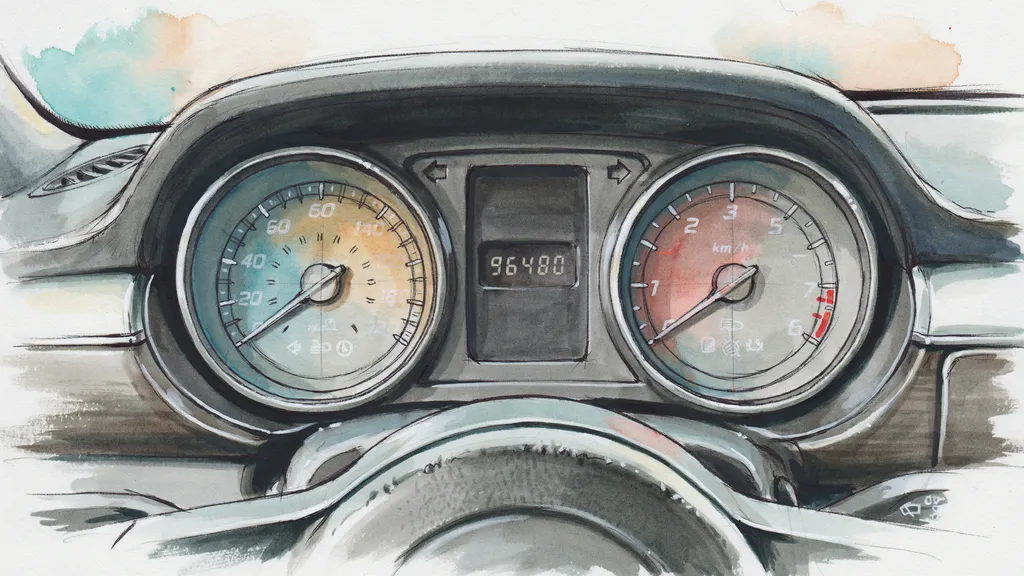
- Mileage overrun: you exceeded the contractual mileage cap. The finance company applies excess-mileage charges (€0.05–€0.15/km above cap) which reduce the equity below the GMFV.
- Market depreciation: residual values dropped faster than the GMFV anticipated. Diesel cars 2019–2022 are a textbook example — Irish demand softened on older diesels, residuals fell, GMFVs were sometimes set at "optimistic" 2019 levels.
- Damage / heavy wear: condition charges at return reduce the trade-in value below the GMFV.
The CCPC's PCP fact sheet (ccpc.ie) lays out the consumer-protection concerns and the questions to ask before signing — including:
- "What is the total amount payable if I keep the car?" (deposit + all monthlies + balloon)
- "What is the total cost of credit?" (interest only)
- "What is the mileage cap and excess-mileage charge?"
- "What is the fair-wear-and-tear standard at return?"
- "What happens if my circumstances change before term-end?"
See our Car Finance Ireland guide for the full CCPC concerns and the practical questions to ask before signing.
GAP insurance and negative equity
GAP (Guaranteed Asset Protection) insurance covers the "gap" between what your insurer pays for a written-off car (its current market value) and what you still owe on the finance (typically more than market value in the early years of any finance agreement).
On PCP especially, the early-year gap can be material: you might owe €25,000 mid-term on a car the insurer values at €18,000 after a write-off. Without GAP, you'd pay €7,000 out of pocket to settle the finance. GAP policies cost €200–€500 over the term and pay the difference if needed.
GAP insurance is most valuable on PCP and HP in the first 24 months, and least valuable on credit union loans (where you own the car outright and the gap between market value and outstanding loan balance is typically smaller). Read the small print — many GAP policies exclude voluntary surrender and only cover total-loss-by-accident scenarios.
Track every euro the car costs.
Finance is one component. Fuel / insurance / motor tax / NCT / servicing / depreciation all stack on top. odo.ie tracks the lot in one place — finance payment, fuel logs, service history, renewals — and shows real €/100 km, real €/month, real €/year. Free Solo for one car; Family €4/mo for three.
Sources
- Competition and Consumer Protection Commission (CCPC) — PCP fact sheet, Hire Purchase guidance, regulatory reports.
- Consumer Credit Act 1995 — statutory protections for HP and PCP including the half-rule.
- Credit Union Act 1997 — credit union loan structure and member protections.
- Irish League of Credit Unions (ILCU) — average car loan rates across affiliated credit unions.
- Bank of Ireland, AIB, permanent tsb, Avant Money — May 2026 published HP and personal loan APRs.
- VW FS, Kia Credit, Nissan, Toyota Financial — manufacturer finance arms, May 2026 promotional rates.
- citizensinformation.ie — car finance overview.