
On an Irish learner permit you must be accompanied by a qualified driver (full licence 2+ years) at all times, display L-plates, cannot drive on motorways or tow any trailer, and must obey a lower 20 mg drink-drive limit. The Clancy Amendment lets gardaí seize your car on the spot if caught driving alone. First-time learners must hold the permit for at least 6 months before sitting the driving test. From 1 November 2026, a new reform caps learner permits at 4 maximum, requires an actual (not-just-booked) test in the previous 2 years for a 3rd or 4th permit, and imposes a 7-year cumulative cap after which the whole process restarts from scratch.
What a learner permit actually is
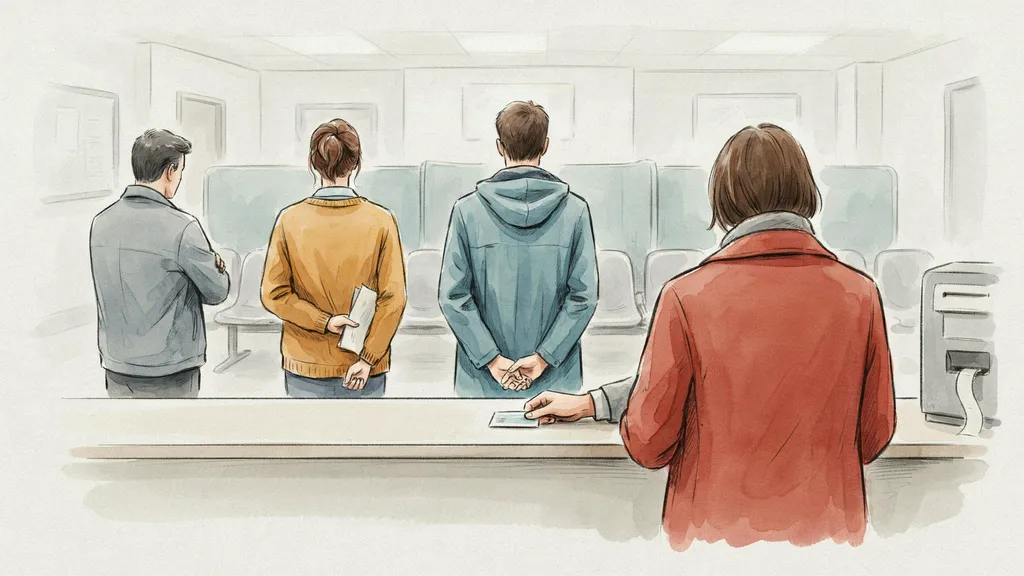
The Irish learner permit is the official driving document you hold while learning to drive. It replaced the old provisional licence in 2007 when Ireland formalised learner-driver rules. It is issued by the National Driver Licence Service (NDLS) on behalf of the RSA.
A learner permit lets you drive on public roads — but only under strict conditions. It is not a full licence. Think of it as a conditional authorisation that exists solely so you can practise driving between your EDT lessons under supervision.
| Item | Detail |
|---|---|
| First permit fee | €45 (up from €35 on 1 Jan 2025) |
| Fee if aged 70+ | Free |
| Validity | 2 years (first and second permits) |
| Minimum age (Cat B car) | 17 years |
| Prerequisite | Pass the driver theory test within the last 2 years |
| Where to apply | NDLS.ie online or any of 34 NDLS centres |
See our complete Irish driving test guide for the full end-to-end journey including the theory test and the 12 mandatory EDT lessons.
The rules while you hold a learner permit
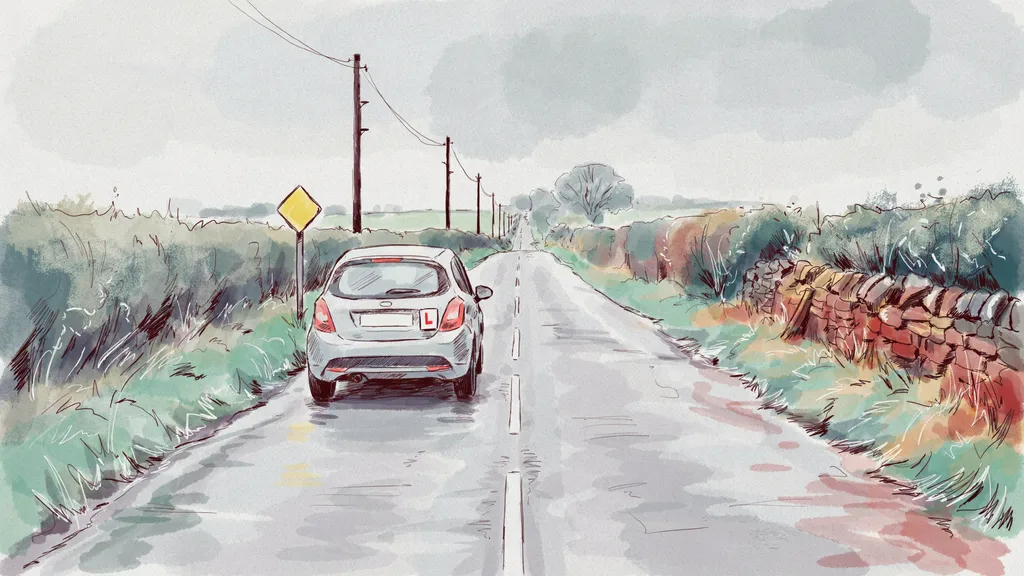
Every Category B (car) learner permit holder must obey all of the following at all times — not just during lessons, not just on test day, always:
Minimum 15 cm tall, red L on white background, clearly visible. Penalty for non-display: fixed charge and penalty points.
They must hold a full Category B licence for at least 2 continuous years, and they must be in the front passenger seat. No exceptions.
Learner permit holders are banned from all motorways. This includes the M50 in Dublin and every other M-prefixed road in the country.
Not even a small trailer. Towing requires Category BE, which is a separate entitlement and test.
20 mg of alcohol per 100 ml of blood — effectively zero. One drink will put you over.
Learner and novice drivers are automatically disqualified for 6 months at 7 penalty points (versus 12 for experienced drivers).
Gardaí can request to see it at any roadside stop.
Learner permit holders on categories AM (moped), A1 (motorcycle ≤125cc), A2 and A are not required to be accompanied — you cannot carry a pillion passenger on a bike as "supervision" anyway. Different L-plate sizes apply for motorcycles. The rest of this guide focuses on Category B car drivers.
The Clancy Amendment — your car can be seized
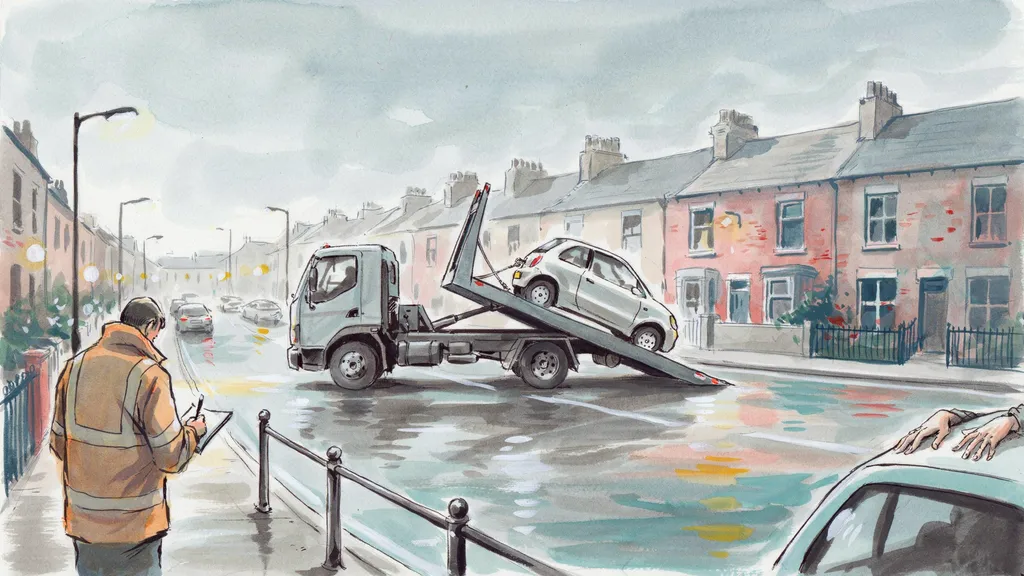
The Clancy Amendment is a change to Irish road traffic law that allows gardaí to seize a vehicle on the spot if a learner is caught driving unaccompanied. It was named after Geraldine Clancy and her daughter Louise, who were killed in 2015 by an unaccompanied learner driver. The amendment closed a loophole in the enforcement of the unaccompanied-driving offence.
- 2 penalty points on your licence (4 on court conviction)
- €120 fixed charge (rising if unpaid)
- Vehicle seizure on the spot under the Clancy Amendment
- The car owner can be prosecuted separately for allowing it
- Insurance invalidated for the incident — you are personally liable for any claim
Given the 7-point disqualification threshold for learners, a single unaccompanied offence takes you most of the way to an automatic ban. If it happens twice you are almost certainly disqualified. The enforcement consequences are significantly worse than people realise.
The 6-month rule before your first test
First-time learner permit holders must hold their permit for at least 6 months before they can sit the practical driving test. The rule was introduced as part of the Graduated Driver Licensing scheme in 2011, alongside EDT, to ensure new learners accumulate real supervised practice before being tested.
The 6 months run from the date your first permit is issued. Practical advice:
You can apply for the practical driving test the moment you hold your learner permit — you do not need to finish EDT first. Apply via MyRoadSafety.ie immediately.
Average national waiting time in 2026 is ~12 weeks, so by the time the 6-month minimum passes and you've finished EDT, your test date should be close. See our waiting times guide for centre-by-centre data.
The waiting list is the bottleneck, not your readiness. You can always reschedule (twice, free of charge) if the test comes up before you're confident.
If you are on your 2nd, 3rd or subsequent permit, the 6-month minimum does not apply again — you can sit a test as soon as the waiting list reaches you. Under the November 2026 reform, anyone on a 3rd+ permit must actually take a test within any 2-year window to qualify for renewal.
Accompanying driver requirements
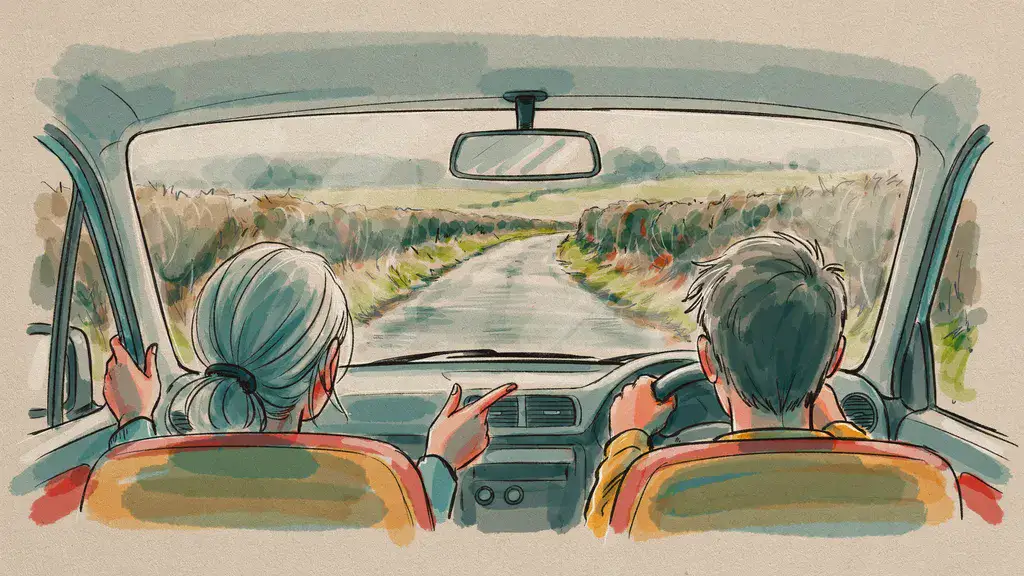
Your accompanying driver is not a passenger — they are a legal co-responsibility. Every qualified driver who sits beside a learner must meet all of the following:
Not a learner permit, not a foreign licence under exchange, not an expired licence.
In the same category as the learner is learning in. This rules out novice (N-plate) drivers entirely.
Not in the back, not following in another car, not over a phone. Physically beside the learner with full view of the road.
The accompanying driver is treated as a de-facto driver in the eyes of the law — they cannot be drunk or impaired.
The car's insurance must cover a learner being the driver. Check the policy wording before any drive.
A driver on N-plates is in the first 2 years of holding a full licence. They do not yet meet the "2 continuous years" requirement and cannot legally accompany a learner. This trips up families where an older sibling recently passed their test — you have to wait until your N-plate period ends.
The November 2026 reform — every detail
On 1 November 2026, the single biggest change to Irish learner permit rules since the Graduated Driver Licensing scheme in 2011 takes effect. The reform targets the "perpetual learner" loophole where thousands of drivers have rolled permits indefinitely without ever sitting the practical test. Here is exactly what changes:
- Maximum of 4 learner permits per driver in Category B (unless medically restricted)
- 3rd and 4th permits require evidence that you have actually taken (not just booked) a driving test within the previous 2 years
- The 4th permit is valid for 1 year only (instead of the usual 2)
- After a cumulative 7 years on learner permits, the whole process restarts — new theory test, new learner permit, EDT and practical test again
- No exceptions under the new legislation beyond medical restriction
- The reduced EDT (6 lessons) cannot be used a second time
What "actually taken a test" means
The key change is that booking a test does not count. You must have physically turned up at a test centre and sat the practical test within the 2-year window. The rule is designed to stop people booking tests purely to qualify for a permit renewal and then never showing up — a pattern the RSA has tracked through rising no-show rates.
If you sat a test and failed, that counts — you qualify for another permit. If you sat a test and passed but haven't yet applied for your full licence, that also counts (and really, why are you still on a learner permit at that point?).
The 4th permit is 1 year, not 2
The 4th permit is treated as a final chance. You get 12 months to sit and pass the driving test. If that 12 months runs out and you haven't passed, you fall into the restart scenario — and the 12 months also counts against your cumulative 7-year total.
The 7-year cap
Across all your learner permits, if the cumulative time you've held them totals 7 years or more, the entire process restarts from scratch. That means:
- Pass the theory test again (€45, 2-year certificate validity)
- Apply for a new first learner permit (€45)
- Complete the 6-month minimum hold before sitting another practical test
- EDT rules apply again if you have already used the reduced EDT once (you cannot use it a second time)
- Sit the practical driving test (€85)
In effect, the clock resets completely. Years of supervised driving experience do not carry over in any formal way.
The scale of the problem — why the reform exists
The numbers make clear why the RSA pushed for legislative change. As of April 2026:
Approximately 140,000 drivers are currently on a 2nd or subsequent learner permit.
The RSA has already written directly to all 68,787 drivers in this group warning them of the November 2026 changes.
Approximately 38,000 learner permit holders have never taken the practical driving test at all.
The RSA has already started the process of contacting affected drivers directly. If you are on a 3rd or subsequent permit and haven't received correspondence yet, expect it soon — the letter will explain how the November rules apply to you specifically.
If you hit the 7-year cap — the restart
This is the nightmare scenario the reform is designed to force action on. If you have held learner permits for 7 cumulative years, your journey resets completely. Here is what that looks like in practice:
At the point of your 4th permit expiring or your 7th cumulative year, you no longer hold a valid permit. You are not allowed to drive at all until you re-enter the system.
Your original theory test certificate is long expired (2-year validity). Rebook at theorytest.ie and pass 35 out of 40 questions again.
Apply at NDLS with your new theory cert. This is treated as a brand-new first permit — you are a first-time learner in the eyes of the system.
The 6-month rule applies again because it is a "first-time" permit. You cannot sit the practical test until those 6 months have elapsed.
The RSA has not published a blanket answer on whether years of previous EDT records count toward a new first permit. Assume you need to complete the full 12 lessons unless your instructor confirms otherwise.
Apply at MyRoadSafety.ie and sit the practical test. You are now a first-time test candidate in the eyes of the waiting-list priority system.
The whole restart pathway takes at least 7–8 months from the day you sit the theory test, probably longer given current waiting times. Realistically a year. That is the cost of rolling permits indefinitely instead of sitting the test when the system asked you to.
Insurance implications of learner status
Learner drivers face the highest motor insurance premiums in the Irish market. The risk profile is dominated by two factors: lack of experience and the conditional nature of the permit itself.
- Named driver on a parent's policy — the cheapest option, typically adding €300–€800 to the existing policy. The most common arrangement for family learners.
- Own policy as a young learner — €1,500–€3,000+ per year is the realistic range. Some insurers won't quote at all for under-25 learners.
- Own policy as a 25+ learner — €800–€1,500 is more typical. Age is the single biggest rating factor.
- Cover for any accompanying driver — the policy must list any accompanying driver who will supervise you, not just yourself. Check the wording.
For ways to keep the learner-year premium under control, see our guides on cheapest cars to insure for young drivers in Ireland and how to pay less for car insurance in Ireland.
"Fronting" is the practice of naming a parent as the main driver when the learner is actually the main driver. It is a form of insurance fraud and can result in the policy being voided, the claim refused, and in some cases criminal prosecution. If the learner will be doing most of the driving, they must be listed as the main driver — even if it costs more.
Do I need to act now?
Not necessarily. Most learners are not affected by the November 2026 reform at all. The quick decision tree:
You are on your 1st or 2nd permit
No urgent action needed. Finish EDT, book your test early, sit it and pass. The November rules don't affect you unless you end up on a 3rd permit.
You are on your 3rd permit
Check your last test date. If you have sat a driving test in the last 2 years, you qualify for any renewal. If not, book a test now — even if you're not ready. Sitting counts; failing still counts.
You are on your 4th permit or close to 7 years
Act immediately. Book the soonest test slot at any centre, do intensive pretest lessons, and sit the test. If you don't pass before your permit expires, you restart from scratch.
What to check on your permit card
- Permit number — are you on your 2nd, 3rd or 4th?
- Issue date — when was it issued?
- Expiry date — does it fall after 1 November 2026?
- Cumulative years — add up all your past permits. If close to 7, you are close to a restart.
If anything is unclear, contact NDLS directly on 0818 700 800 or at ndls.ie. They can confirm your permit history and warn you of any risk under the new rules.
Track your permit expiry so November 2026 doesn't sneak up on you
The simplest way to avoid the November 2026 trap is to know exactly when your current permit expires — and set a reminder well ahead. odo.ie is a free service tracker originally built for cars, but the same reminder system works perfectly for learner permit expiry, NCT, motor tax and insurance. Set a custom reminder for your permit and get emailed 30, 14, 7 and 1 day before it runs out.